
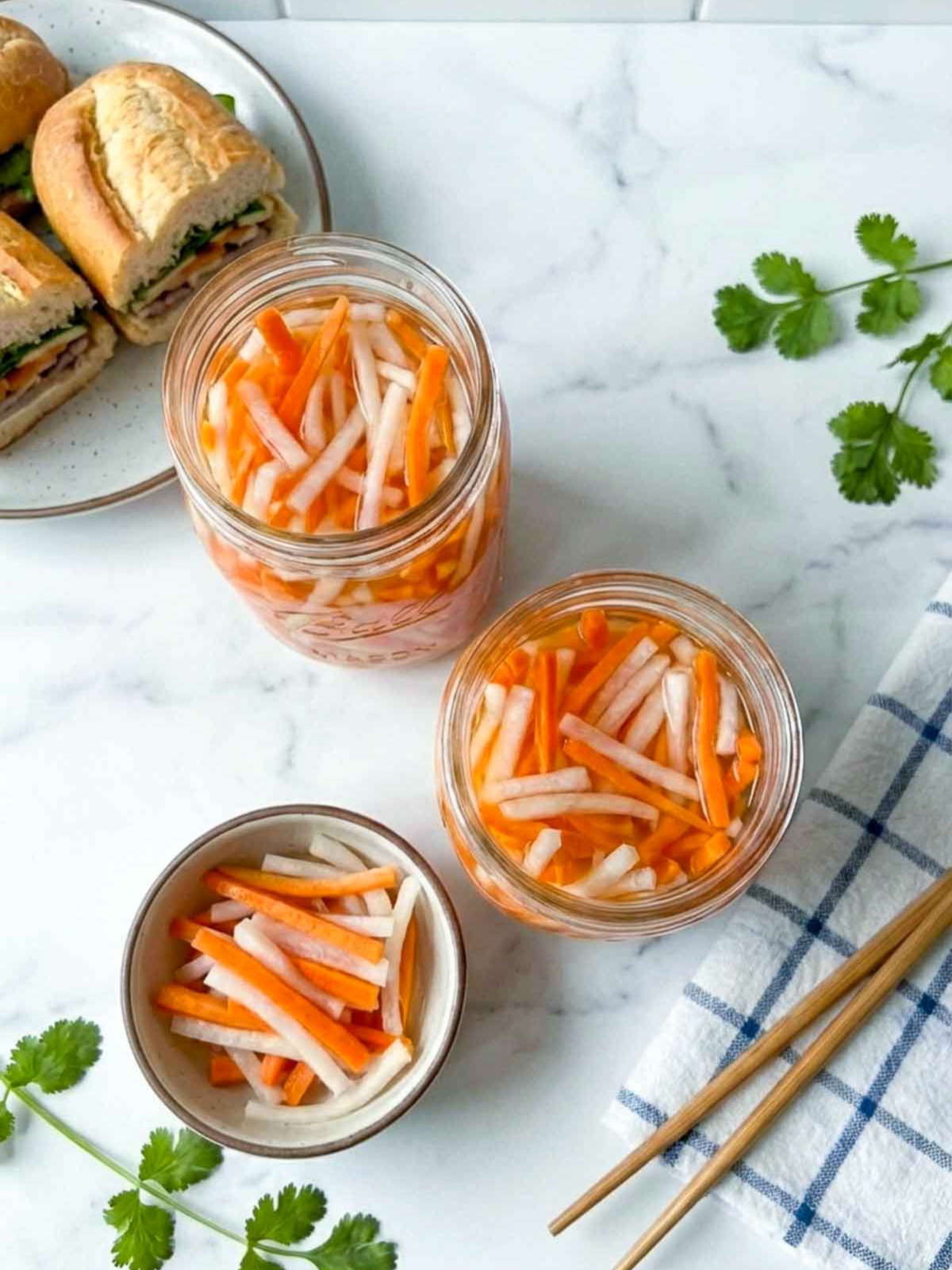
There's a reason banh mi tastes the way it does. It's not just the pork, the herbs, or the baguette; it's the pickles. Those thin, tangy-sweet matchsticks of carrot and daikon cut through the richness and make every bite feel balanced. That right there is Đồ Chua or Vietnamese pickled carrots and daikon. Once you make it at home, you'll want a jar in your fridge at all times.
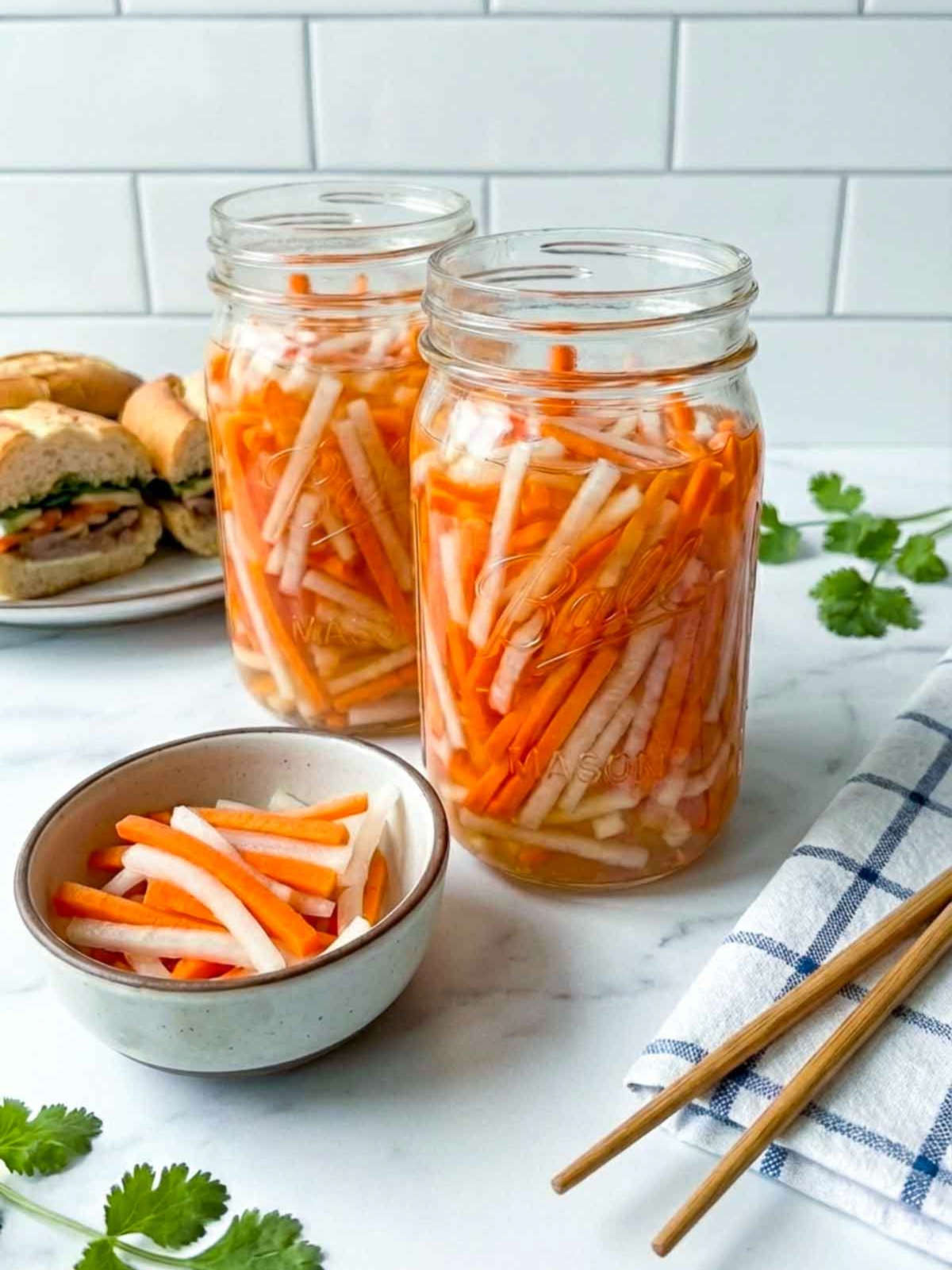
The brine is simple: vinegar, sugar, water, salt. No spices, no garlic, no shortcuts that muddy the flavor. What you get is clean and bright - lightly sweet, pleasantly tangy, and just enough of an edge to make your taste buds pay attention. This is the kind of Vietnamese pickled vegetables recipe that makes you realize how much a condiment can do.
Jump to:

What Is Đồ Chua?
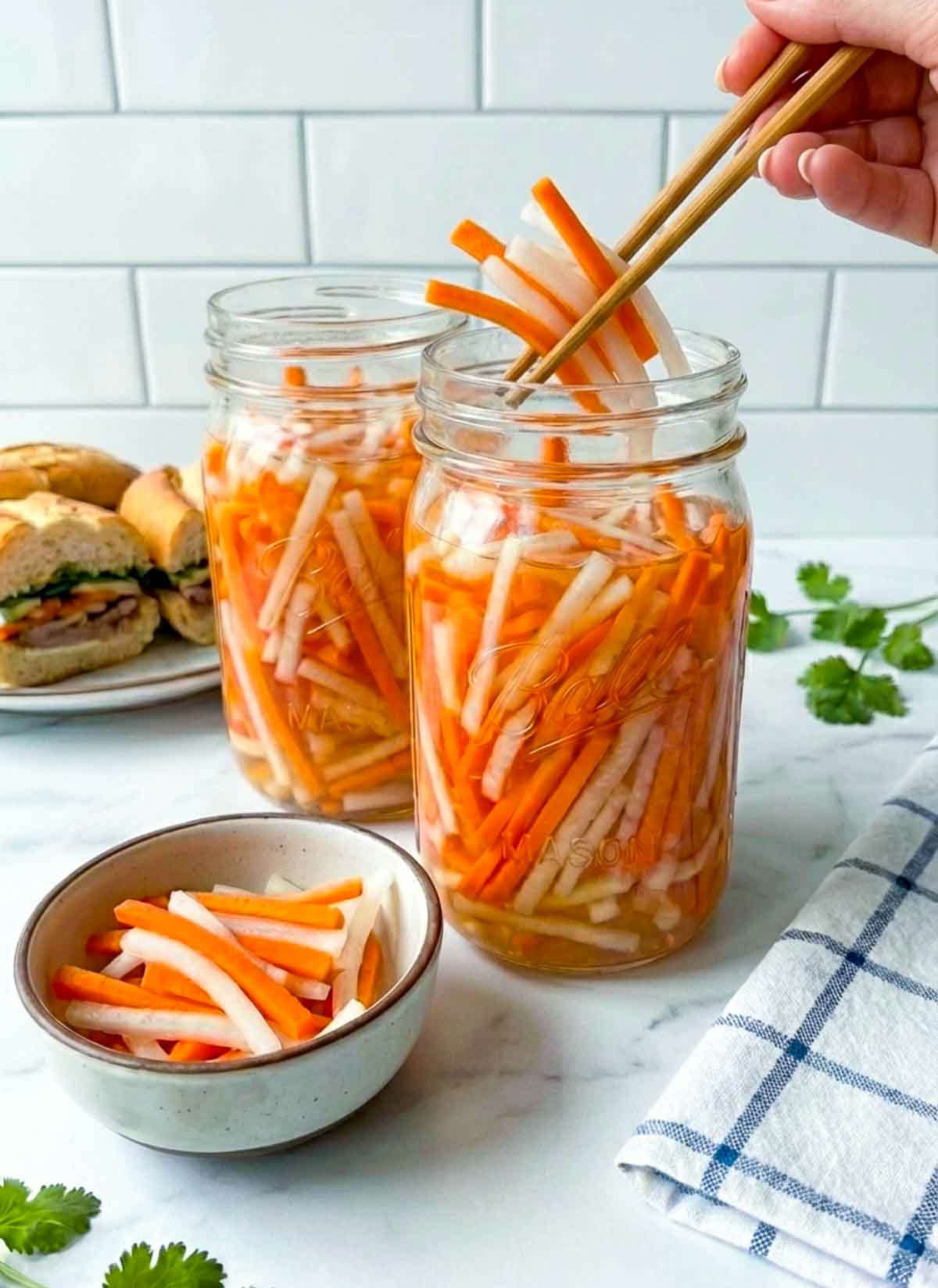
Đồ Chua (pronounced doh choo-ah) translates roughly to "sour stuff" in Vietnamese. It's the classic condiment layered into banh mi, spooned over bún bowls, and served alongside grilled meats across Vietnam. Unlike fermented or canned pickles, this is a quick refrigerator pickle: no canning equipment, no waiting weeks. The vegetables cure in a sweet-tangy brine and are ready to eat in as little as 4 to 6 hours, with the best flavor developing after 24 hours.
Why You'll Love This Recipe
- No special equipment. just a knife or a julienne peeler and mason jars.
- Ready in under 30 minutes of active time, the fridge does the rest.
- Clean, classic brine, no spices or additives, just the flavor of the vegetables and vinegar.
- Crisp, not watery. The quick salt massage step makes all the difference in texture.
- Keeps for 3-4 weeks. Make a big batch once and reach for it all week.
- Endlessly versatile: banh mi, rice bowls, grilled meats, noodle salads, lettuce wraps.
Ingredient Notes
The full ingredient list is in the recipe card below, but here's what to know before you start; because with a recipe this simple, the ingredients do all the work.
- Daikon radish is the backbone of these homemade pickled carrots and daikon. Look for firm, smooth daikon no wider than about 2 inches. Younger, thinner ones are milder and sweeter, while older, fatter daikons can turn bitter. Once pickled, the daikon softens slightly but keeps a satisfying crunch and loses most of its raw peppery edge.
- Carrots add natural sweetness and that bright orange color that makes the jars look so good. Use fresh, firm carrots. The pre-shredded bagged kind won't give you the right texture for daikon and carrot pickles.
- White vinegar is the right call here. Some recipes use rice vinegar, and it does work, but white distilled vinegar keeps the brine perfectly clear and gives the sharpest, most classic flavor. This is how to make Vietnamese pickles the traditional way: clean brine, nothing muddying it.
- Sugar balances the acid. Don't reduce it thinking you're making it healthier; it's what separates Đồ Chua from just sour vegetables.
- Salt does double duty: a pinch goes into the vegetable massage before pickling to draw out moisture, and a measured amount goes into the brine for seasoning. Both matter.
Serving Ideas for Vietnamese Pickled Carrots and Daikon
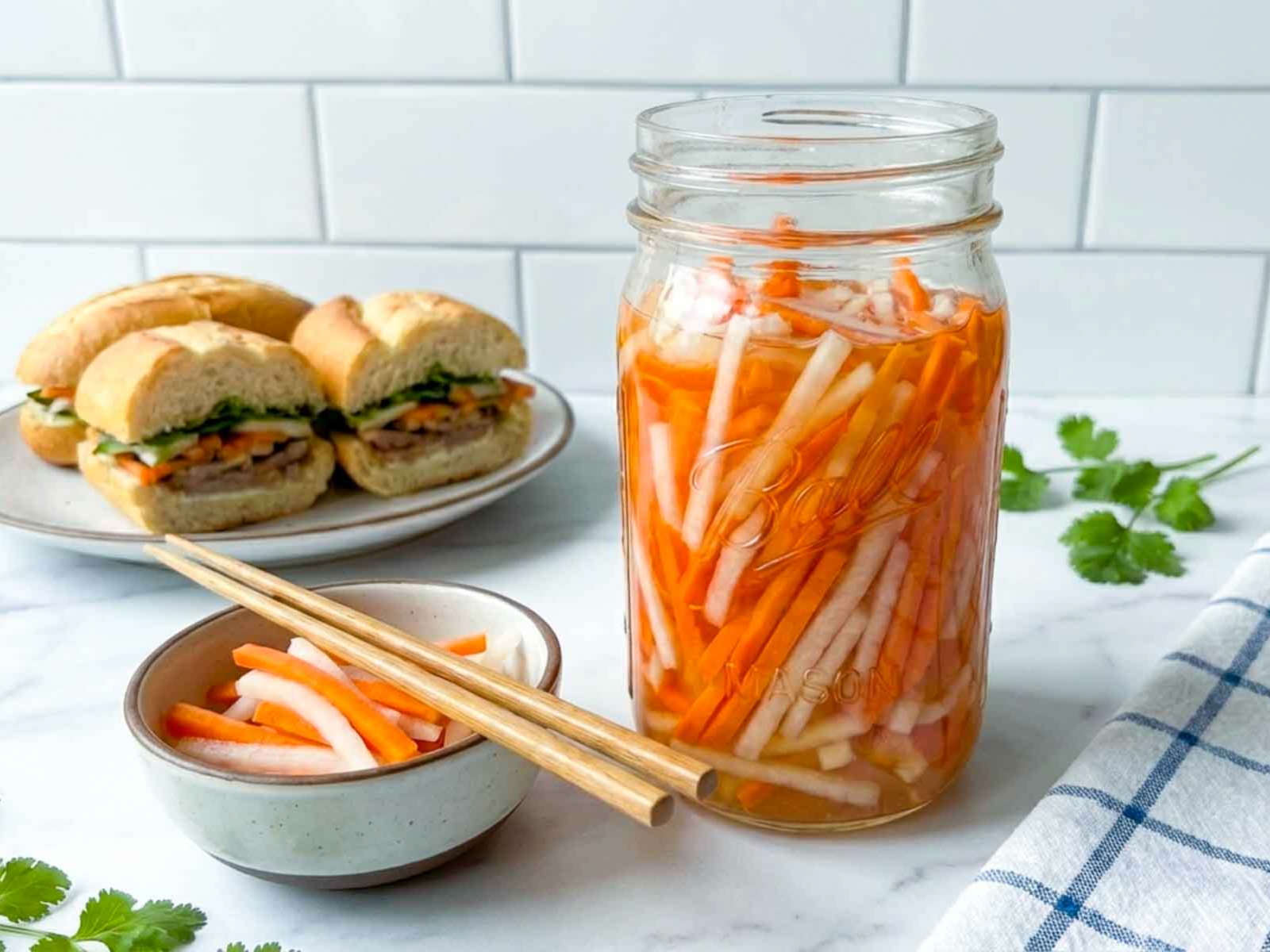
These Asian pickled vegetables aren't just for banh mi (though yes, absolutely for banh mi). Here's where else they shine:
- Alongside dumplings or spring rolls - a natural pairing with East Asian flavors
- Banh mi sandwiches - the classic application; they belong here
- Vietnamese noodle bowls (bún bò Huế, bún thịt nướng) - add brightness and crunch
- Grilled pork or chicken - the acidity cuts through the richness beautifully
- Rice paper rolls - tuck a few pieces in for texture contrast
- Grain bowls and salads - they work anywhere a quick-pickled vegetable would
Tips for the Best Vietnamese Pickled Daikon and Carrots
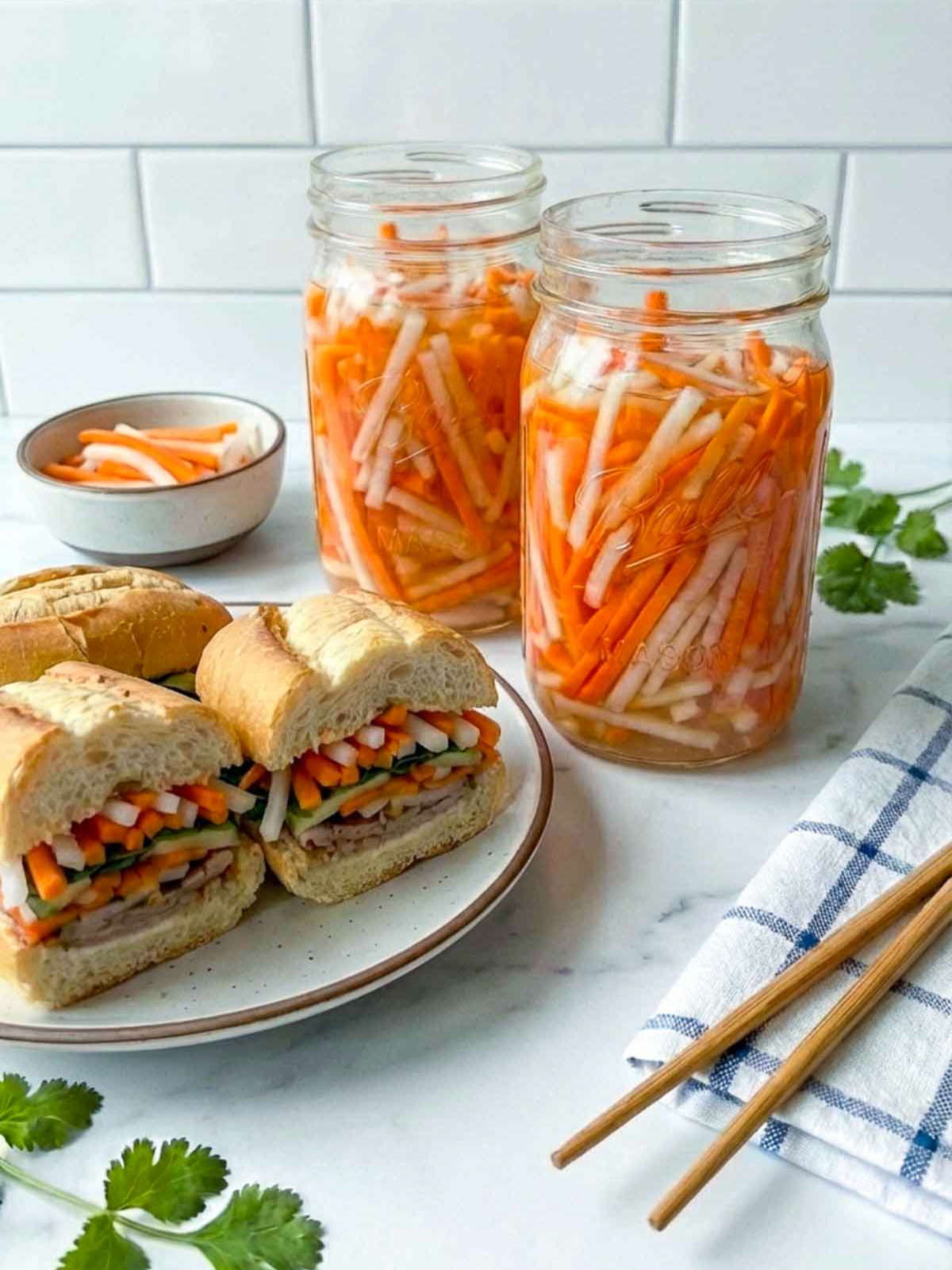
- Cut size matters. Keep everything thin and even, about ¼ inch thick or thinner. Thick pieces won't absorb the brine properly, and you lose that signature texture.
- Balance your brine. Before pouring, taste it. The sweet-tangy-salty balance should be obvious but not aggressive.
- Use white vinegar. Rice vinegar is sometimes suggested and does work, but white distilled vinegar gives the cleanest, most classic flavor here. The brine stays clear and bright.
- Glass jars only. The vinegar will interact with plastic over time. Mason jars are ideal.
Recipe FAQs
Stored in a sealed glass jar in the refrigerator, these homemade pickled carrots and daikon keep well for up to 3 to 4 weeks.
Daikon and carrot together are a classic combination: the daikon brings a distinctive, mild peppery note, while the carrot adds natural sweetness. You can use just carrots in a pinch, but the flavor won't be quite the same as traditional Đồ Chua.
You can, though, that takes it outside the traditional Đồ Chua style. If you want heat, a thin slice of fresh jalapeño works. Garlic will add depth, but will also cloud the brine.
Yes. Daikon is a type of radish, so pickled daikon radish and Vietnamese pickled radish refer to the same vegetable. Đồ Chua typically combines it with carrot for color, flavor balance, and texture contrast.
Absolutely. A julienne peeler is faster and gives you beautifully even strips with no knife work required. It's the easiest approach if you make this regularly.
If you enjoyed this recipe, please leave a 5-star rating and a comment below. Your support makes a real difference and helps others discover it too.
📖 Recipe
Vietnamese Pickled Carrots and Daikon (Đồ Chua)
Equipment
- Glass Jars with Lids
- Mixing bowl
- Small saucepan
- Knife or Julienne Peeler
Ingredients
For the vegetables
- 2 cups daikon radish peeled and cut into thin matchsticks
- 1½ cup carrots peeled and cut into thin matchsticks
For the brine
- 1 cup warm water
- ½ cup white vinegar
- ¼ cup sugar
- 1 teaspoon salt
Instructions
- Place the cut daikon and carrots in a bowl. Sprinkle lightly with a pinch of salt and gently massage for 1 to 2 minutes until they begin to soften slightly.
- Rinse the vegetables under cold water and squeeze out excess moisture. This step removes harshness and keeps the texture crisp, not watery.
- In a bowl or saucepan, combine warm water, vinegar, sugar, and salt. Stir until fully dissolved.
- Pack the vegetables into clean jars, keeping them fairly tight but not crushed.
- Pour the brine over the vegetables until fully submerged. Let sit at room temperature for about 1 hour, then seal and refrigerate.
- Ready to eat after 4 to 6 hours. Best flavor develops after 24 hours.
Notes
- Texture control: The quick salt massage step is what gives that signature light crunch instead of a raw bite. Do not skip it.
- Cut matters: Keep everything thin and even. Thick pieces won't absorb the brine properly.
- Balance check: Taste the brine before pouring. It should be lightly sweet, tangy, and slightly salty. Adjust before committing.
- Storage: Keeps well in the fridge for up to 3-4 weeks.
- Brine clarity: This style uses a clean, clear brine. No spices, no garlic. That's exactly what you're seeing in your image.
More Condiments To Try Next
- Crockpot BBQ chicken dip is one of those recipes that earns its place at every gathering. It's creamy, cheesy, and packed with bold barbecue flavor that works with chips, bread, or veggies. Easy to prep and hands-off once it's in the slow cooker, it's a reliable party favorite that disappears fast.
- This strawberry ginger jam is soft-set, glossy, and ready in under 40 minutes - no pectin, no canning gear. Fresh ginger gives it a warm finish that makes it work on everything from toast to a cheese board.
- This crockpot peanut chicken dip is rich, creamy, and packed with bold flavor that stands out from the usual party spreads. Every bite has just the right balance to keep people coming back for more. Serve it warm with your favorite dippers and watch it disappear fast.
- This crockpot buffalo chicken dip without cream cheese skips it entirely and is better for it. Sour cream and Greek yogurt create a tangier, brighter base that lets the buffalo sauce come through properly - bold, pull-y, and built for a crowd.
- This crockpot butter paneer dip is rich, creamy, and packed with bold butter masala flavor in every scoop. The texture is thick and satisfying, making it perfect for naan, chips, or fresh veggies. It's the kind of warm dip that disappears fast once it hits the table.
Comments
No Comments