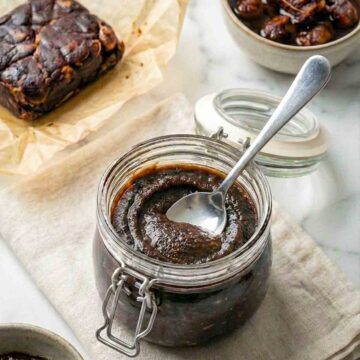
Tamarind paste is one of those ingredients that instantly adds depth and brightness to a dish. I like making homemade tamarind paste from a block of tamarind pulp because the flavor feels fresher, richer, and far more vibrant than many store-bought versions.
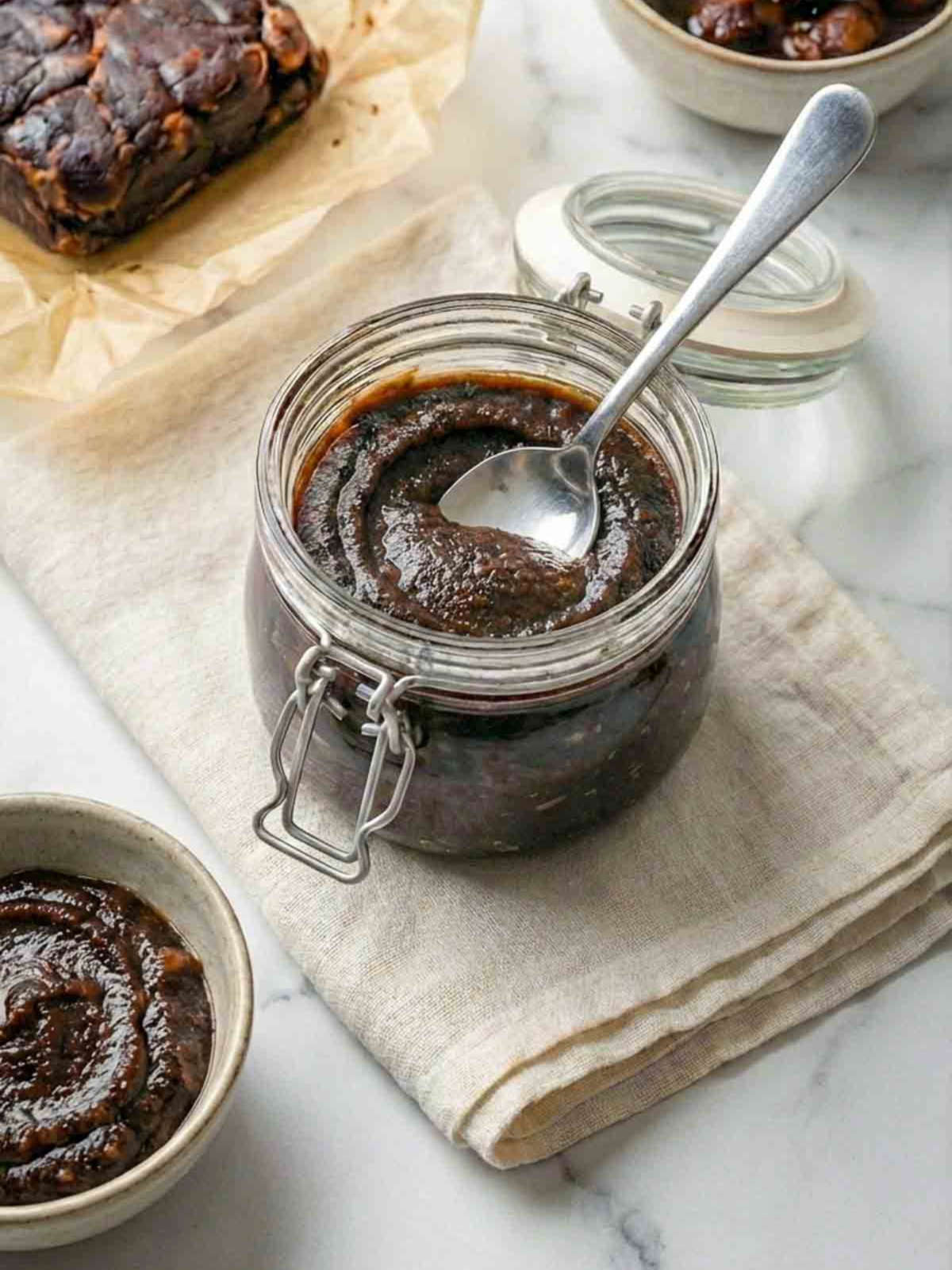
Tamarind naturally has a bold, sweet-and-sour profile that works beautifully in a wide range of cuisines. When prepared into a thick paste, it becomes an incredibly versatile kitchen staple that can be used in sauces, marinades, soups, and dipping sauces. The process is simple and mostly hands-on. The seedless tamarind pulp softens in hot water, releasing its rich flavor before the mixture is strained into a smooth, concentrated tamarind pulp paste.
Jump to:
- Why Homemade Tamarind Paste Is Worth Making
- Choosing tamarind, and what to buy at the store
- A Flavorful Pantry Staple to Keep on Hand
- Get the thickness right (and fix common problems fast)
- Ways to Use Tamarind Paste in Everyday Cooking
- Fast ideas: chutneys, curries, noodles, and drinks
- Fridge, freezer, and portioning ideas that save time
- Tamarind Paste

Why Homemade Tamarind Paste Is Worth Making
One of the things I enjoy about making tamarind paste at home is how much control it gives over the texture and intensity. By soaking the tamarind pulp and gently working it with your hands, the thick pulp separates naturally from the fibers.
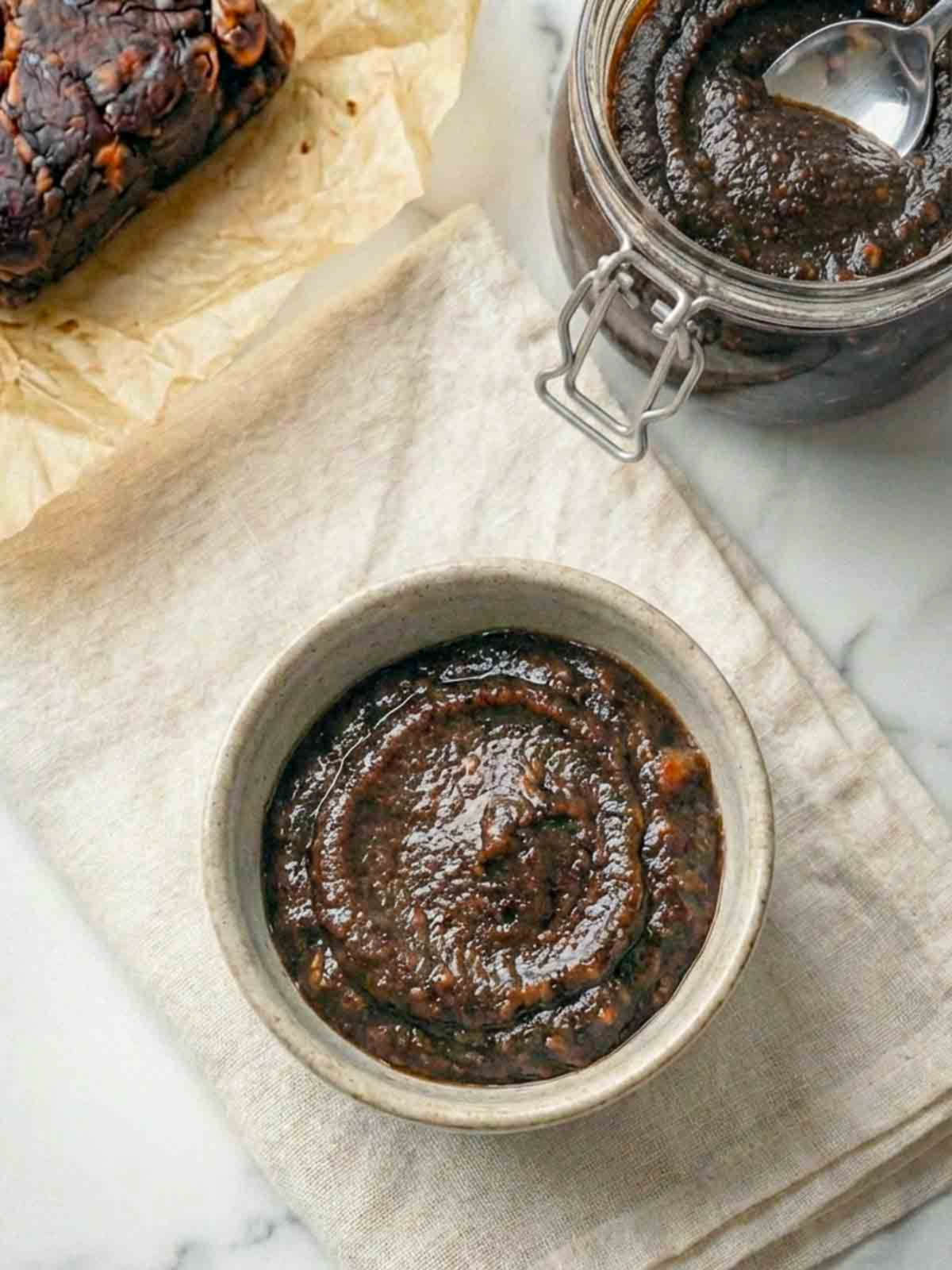
After straining, the mixture becomes smooth and deeply flavored. A short simmer helps the tamarind concentrate slightly, creating the thick, tangy consistency that works well in many recipes. The result is a deeply flavorful paste that carries the signature tangy punch tamarind is known for.
Choosing tamarind, and what to buy at the store
Walk into an Indian, Southeast Asian, or Latin grocery and you'll see several forms of tamarind. Some are perfect for paste, while others take extra work. Knowing what you're looking at saves time and avoids surprise sweetness or added salt.
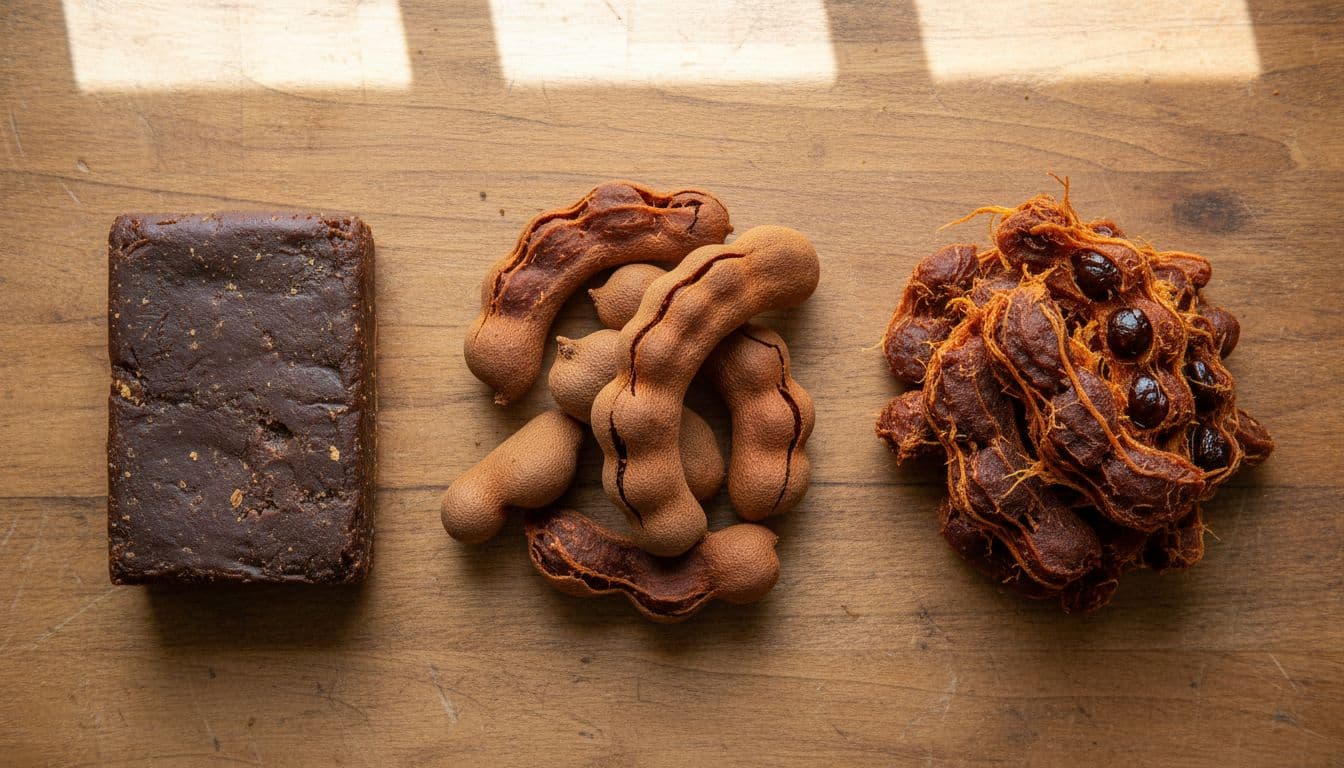
Here are the main forms you'll run into:
- Seedless tamarind pulp block (brick): Compressed pulp, sometimes with a bit of fiber. This is the easiest starting point for homemade tamarind paste.
- Whole tamarind pods: A brittle shell with sticky pulp inside. Great flavor, more prep.
- Tamarind with seeds and fibers: Similar brick, but rougher. It still works well, you'll just strain a bit more.
- Store-bought tamarind concentrate: Convenient, but it can be intense, salty, or slightly "cooked" tasting. It's not the same as paste, although it's useful in a pinch.
Where to find it: look in the international aisle at bigger supermarkets, or check Indian, Thai, Vietnamese, Filipino, and Mexican stores. Online options are easy too, but check ingredient labels. For a first batch, buy a 7 to 14-ounce block. That amount makes enough paste to freeze into small portions, so you can add a cube to soups, chutneys, or marinades whenever you want.
A Flavorful Pantry Staple to Keep on Hand
One of the best things about homemade tamarind paste is how well it stores. A jar in the refrigerator can last for several weeks, and freezing it in small portions makes it easy to use only what you need. With its bold tang and rich flavor, tamarind paste is a simple ingredient that opens the door to many different dishes and flavor combinations across global cuisines.
Get the thickness right (and fix common problems fast)
Think of tamarind paste like an adjustable "sour stock". You can keep it thin for drinks, medium for sauces, or thick for chutney bases. Use these quick fixes:
- Too thick: Stir in warm water, a tablespoon at a time, until it loosens.
- Too thin: Simmer gently for a few minutes, then cool. You can also strain again to remove extra watery liquid clinging to fibers.
- Bitter taste: This can happen with very old tamarind, or if you simmered hard and long. Balance it with a small pinch of jaggery or brown sugar, then add salt to sharpen it.
- Gritty texture: Switch to a finer strainer, or blend briefly and strain again.
One more thing: the paste may darken as it sits. That's normal, and it doesn't mean it's spoiled.
Ways to Use Tamarind Paste in Everyday Cooking
Once prepared, tamarind paste becomes an incredibly useful ingredient to keep in the refrigerator. Even a small spoonful can bring a dish to life with tamarind's complex sweet-and-sour flavor. I often use small spoonfuls whenever a dish needs acidity, brightness, or depth. It works beautifully in dishes such as:
- stir-fry sauces and marinades
- chutneys and dipping sauces
- curries and lentils
- soups and broths
- noodle dishes and rice bowls
- grilled meat or seafood glazes
Fast ideas: chutneys, curries, noodles, and drinks
Once you have this paste in the freezer, these feel almost too easy. A cube can replace a long list of "something's missing" tweaks. These are quick, high-reward ways to use homemade tamarind paste without planning a "special" dish:
- Tamarind-date chutney for chaat, samosas, or as a sandwich spread.
- Sambar or rasam, when you want that classic tang without long soaking.
- Pad Thai sauce with palm sugar (or brown sugar), fish sauce (or soy), and tamarind.
- Spring roll dipping sauce mixed with garlic, chili, lime, and a little sugar.
- BBQ glaze booster stirred into your favorite sauce for a deeper sweet-sour note.
- Chickpea chaat with tamarind, cumin, chili, and chopped onion.
- Quick tangy salad dressing with tamarind paste, olive oil, honey, and salt.
- Tamarind agua fresca with water, ice, and sugar, then strain and chill.
- Tamarind margarita as the sour element (start small, it's strong).
Fridge, freezer, and portioning ideas that save time
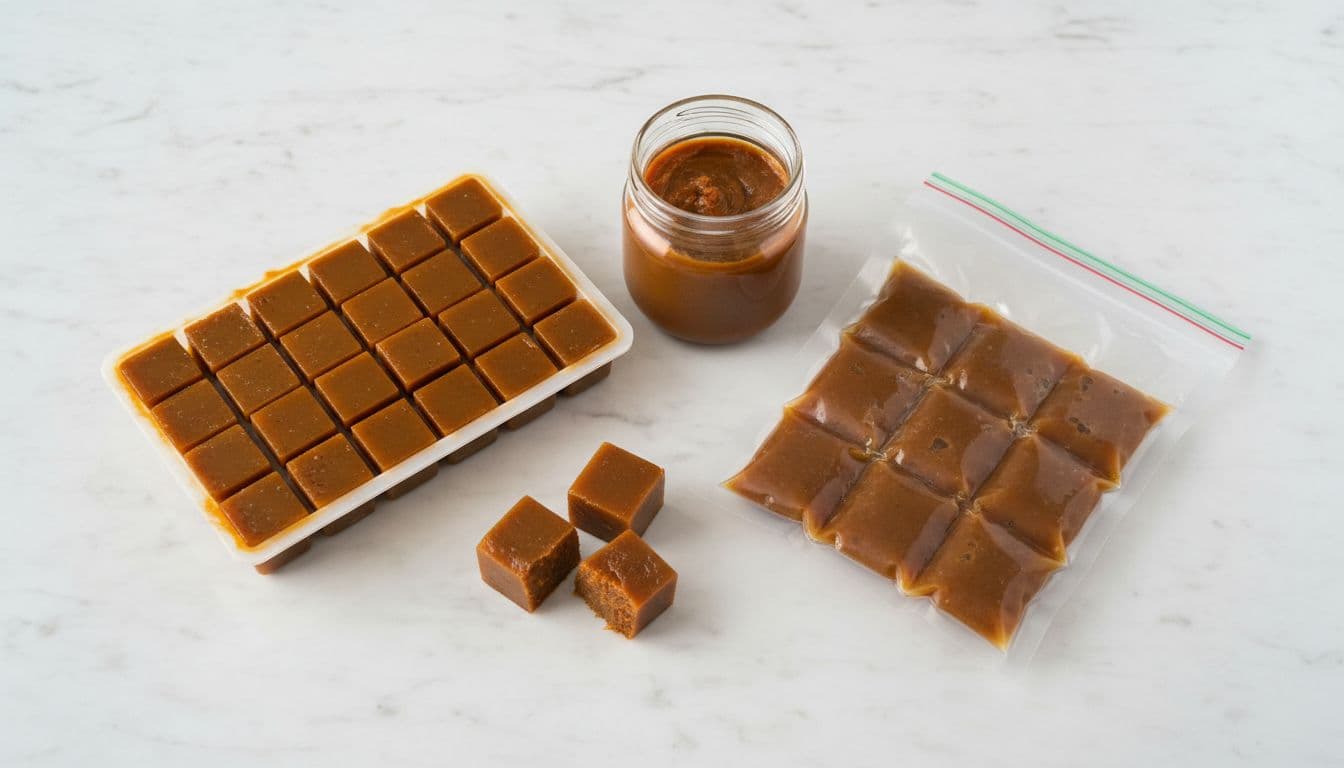
For everyday cooking, small portions make tamarind paste feel effortless. A cube melted in a pan is faster than measuring sticky spoonfuls. Here are easy options:
- Ice cube tray: Freeze, then pop cubes into a sealed bag. Great for curries and soups.
- Silicone mini molds: Same idea, often easier to release.
- Small jars: Best if you use tamarind paste often and don't mind scooping.
- Zip-top bags, flattened: Spread paste in a thin layer, score the bag, then snap off pieces.
Rough timelines (assuming clean handling):
- Fridge: about 2 to 3 weeks
- Freezer: about 4 to 6 months
Salt can help a little, but it's not a safety shield. Clean spoons and tight lids do more.
If you enjoyed this recipe, please leave a 5-star rating and a comment below. Your support makes a real difference and helps others discover it too.
Tamarind Paste
Equipment
- Large heat-proof mixing bowl
- Medium saucepan
- Coarse sieve or strainer
- Rubber spatula or wooden spoon
- Clean glass jars with lids
Ingredients
- 1 pound seedless tamarind pulp block
- 4 cups hot water
- ¾ cup room temperature water
Instructions
- Use your hands to pull the tamarind block apart into smaller chunks and place them in a large heat-proof bowl.
- Pour the hot water over the tamarind pieces and let them soak until the pulp softens, about 20 minutes. This makes it easier to separate the pulp from the fibers.
- Once softened, use clean hands to squeeze and mash the tamarind thoroughly. Continue working it in the water until most of the pulp releases and the mixture becomes thick and pulpy. If the mixture feels extremely thick, add a small splash of water to loosen it.
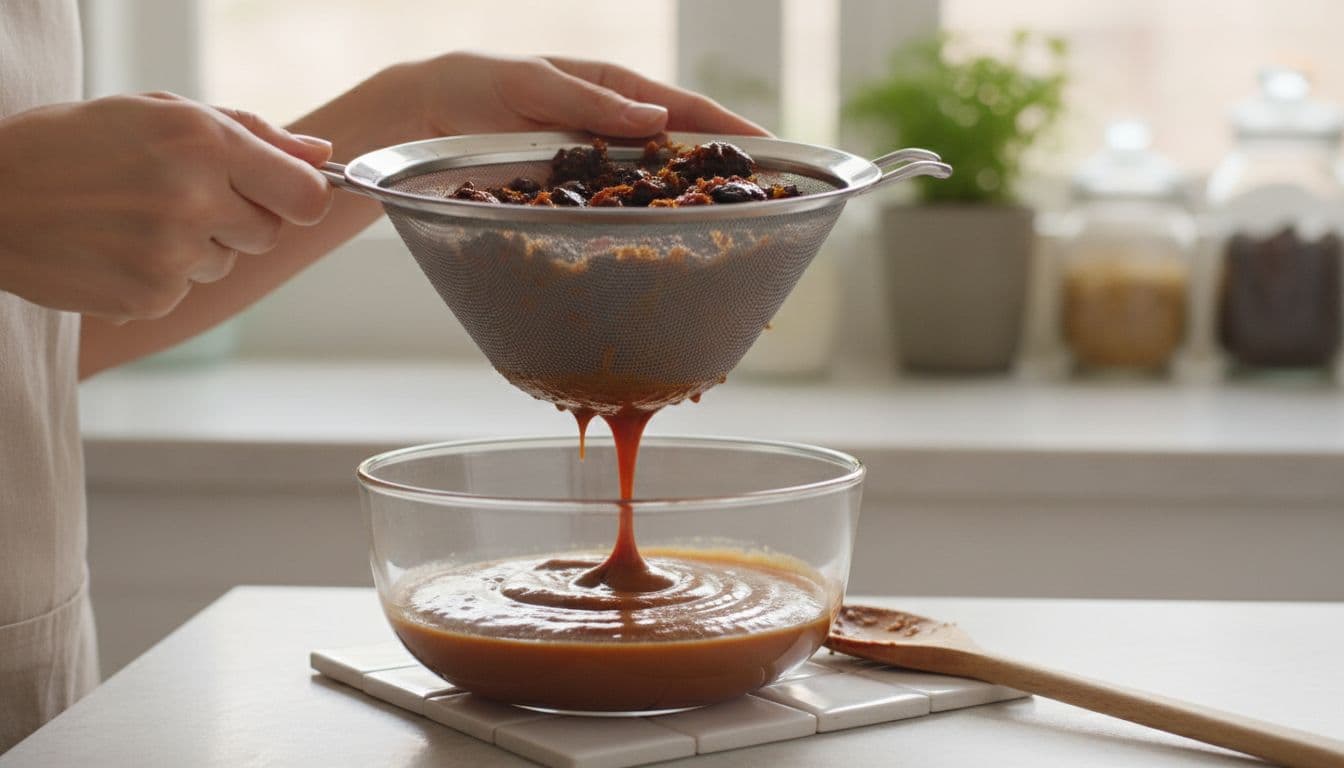
- Set a strainer over a saucepan and pour the tamarind mixture through it. Press firmly with a spatula to push as much pulp through as possible while the fibers stay behind.
- Pour the room temperature water gradually over the remaining fibers in the strainer while mixing them with your hand. Press again so the last bit of tamarind pulp passes through into the pot.
- Discard the fibrous solids left in the strainer.
- Place the saucepan with the strained tamarind mixture over medium heat. Bring it to a gentle boil, stirring frequently because the mixture is thick and can bubble strongly.
- Let it simmer for about 5 minutes until it heats through and thickens slightly.
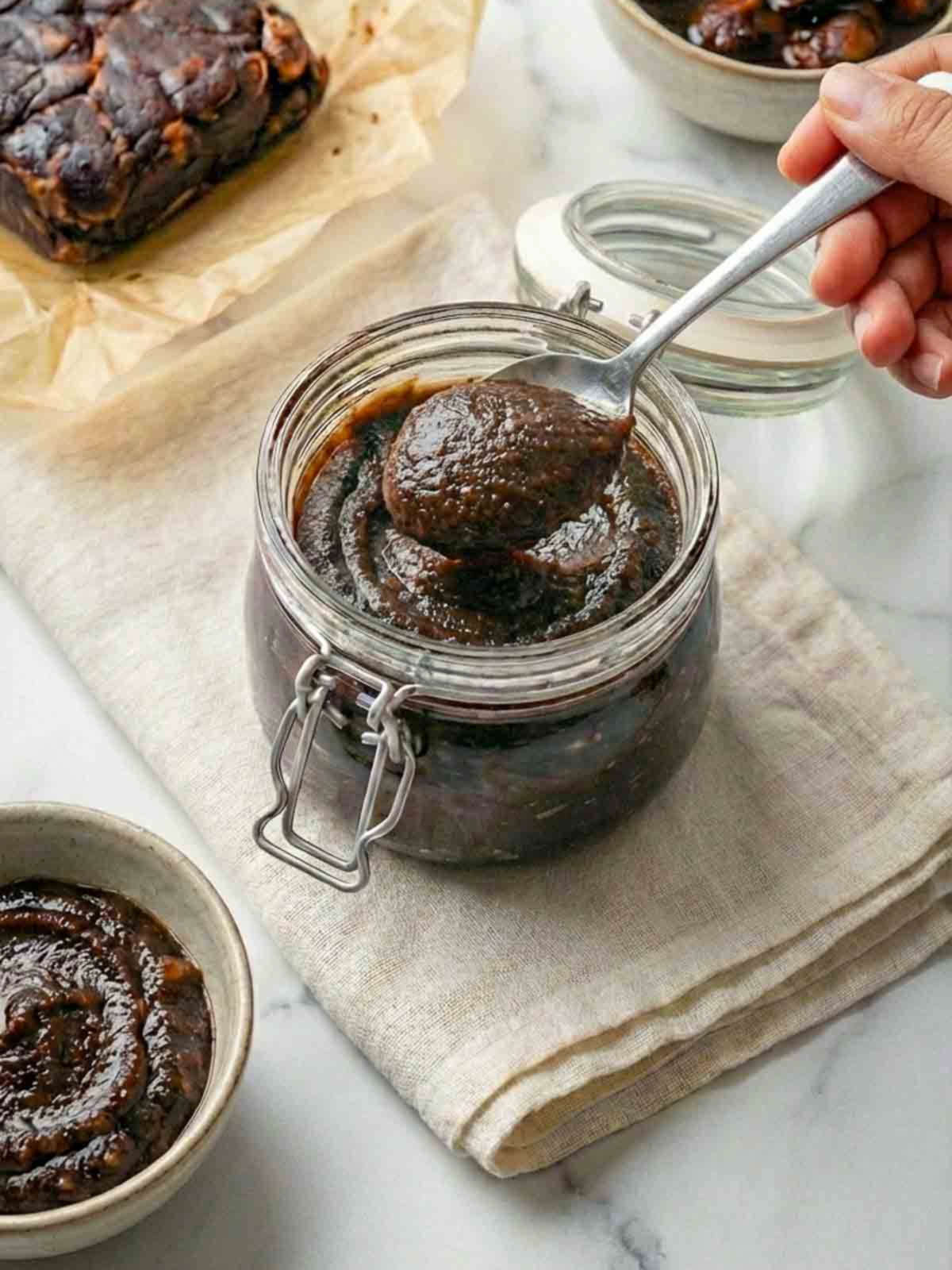
- Remove from heat and allow the paste to cool a little. Transfer the tamarind paste into clean jars, seal with lids, and let them cool completely before storing in the refrigerator.
Notes
- Compressed seedless tamarind pulp blocks work best for making tamarind paste and are widely available in Asian grocery stores.
- The mixture should look thick and pulpy before straining, not dry or overly dense. If it feels too thick while pressing, add a little water to help release more pulp.
- Cooking the paste briefly helps stabilize it and gives the tamarind paste a thicker, more concentrated texture.
- Store the paste in clean jars in the refrigerator for several weeks.
- For longer storage, freeze it in small portions so you can thaw only what you need.