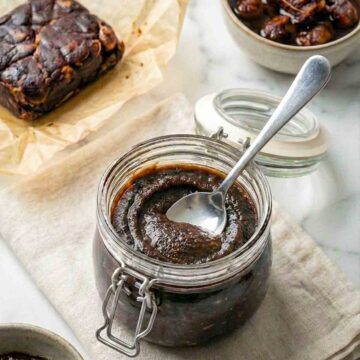
Tamarind Paste
This homemade tamarind paste recipe shows how to turn tamarind pulp into a thick, tangy paste that can be used in many savory dishes. The soaking and straining process releases the sweet-and-sour flavor tamarind is known for while creating a smooth, concentrated texture. Tamarind paste works well in sauces, marinades, chutneys, soups, and stir-fries, making it a useful condiment to keep in the refrigerator for everyday cooking.
Equipment
- Large heat-proof mixing bowl
- Medium saucepan
- Coarse sieve or strainer
- Rubber spatula or wooden spoon
- Clean glass jars with lids
Ingredients
- 1 pound seedless tamarind pulp block
- 4 cups hot water
- ¾ cup room temperature water
Instructions
- Use your hands to pull the tamarind block apart into smaller chunks and place them in a large heat-proof bowl.
- Pour the hot water over the tamarind pieces and let them soak until the pulp softens, about 20 minutes. This makes it easier to separate the pulp from the fibers.
- Once softened, use clean hands to squeeze and mash the tamarind thoroughly. Continue working it in the water until most of the pulp releases and the mixture becomes thick and pulpy. If the mixture feels extremely thick, add a small splash of water to loosen it.
- Set a strainer over a saucepan and pour the tamarind mixture through it. Press firmly with a spatula to push as much pulp through as possible while the fibers stay behind.
- Pour the room temperature water gradually over the remaining fibers in the strainer while mixing them with your hand. Press again so the last bit of tamarind pulp passes through into the pot.
- Discard the fibrous solids left in the strainer.
- Place the saucepan with the strained tamarind mixture over medium heat. Bring it to a gentle boil, stirring frequently because the mixture is thick and can bubble strongly.
- Let it simmer for about 5 minutes until it heats through and thickens slightly.
- Remove from heat and allow the paste to cool a little. Transfer the tamarind paste into clean jars, seal with lids, and let them cool completely before storing in the refrigerator.
Notes
- Compressed seedless tamarind pulp blocks work best for making tamarind paste and are widely available in Asian grocery stores.
- The mixture should look thick and pulpy before straining, not dry or overly dense. If it feels too thick while pressing, add a little water to help release more pulp.
- Cooking the paste briefly helps stabilize it and gives the tamarind paste a thicker, more concentrated texture.
- Store the paste in clean jars in the refrigerator for several weeks.
- For longer storage, freeze it in small portions so you can thaw only what you need.
