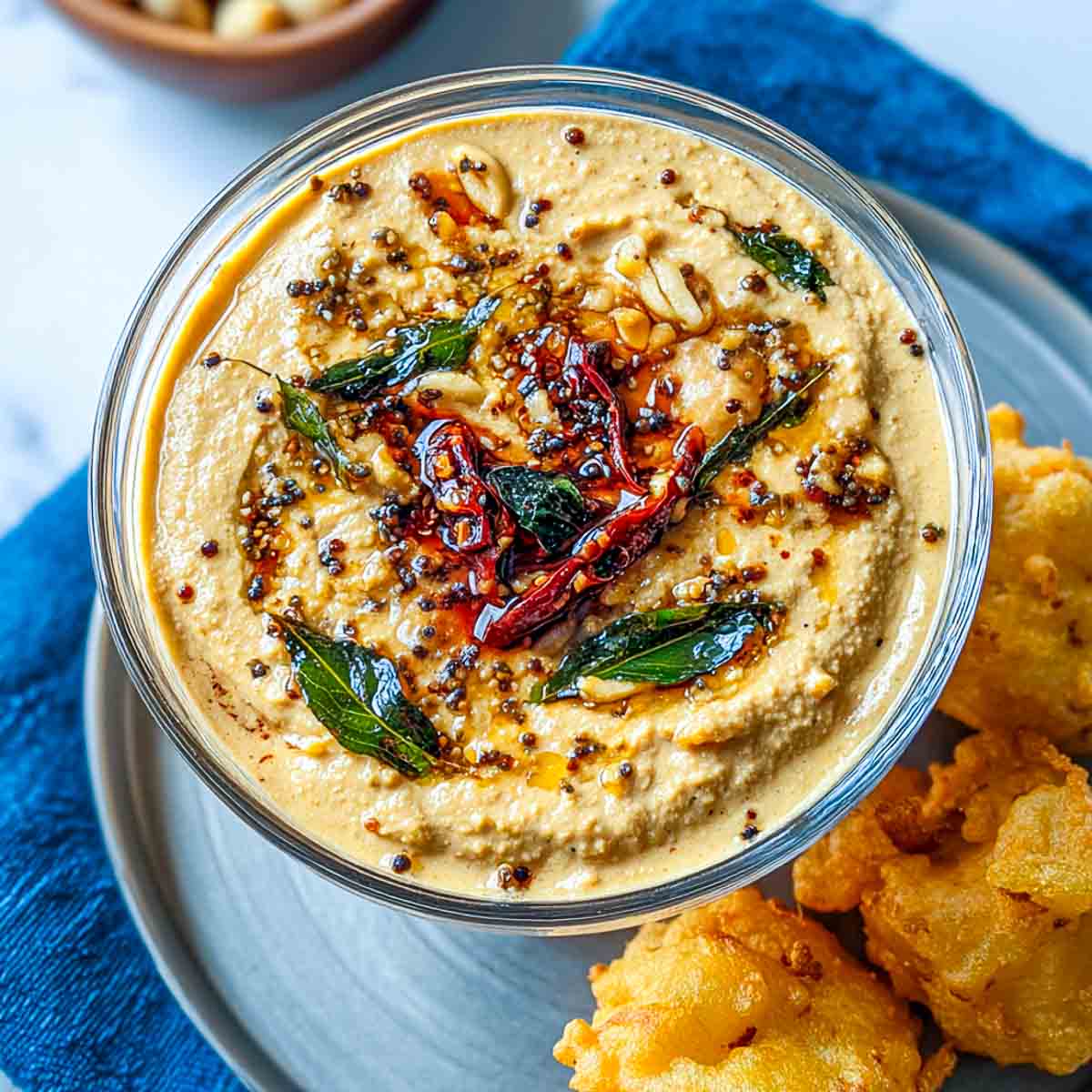
Coconut chutney is something I have eaten all my life. It's just there. Idli, dosa, vada, upma. They all come with it. No one announces it. It simply belongs.
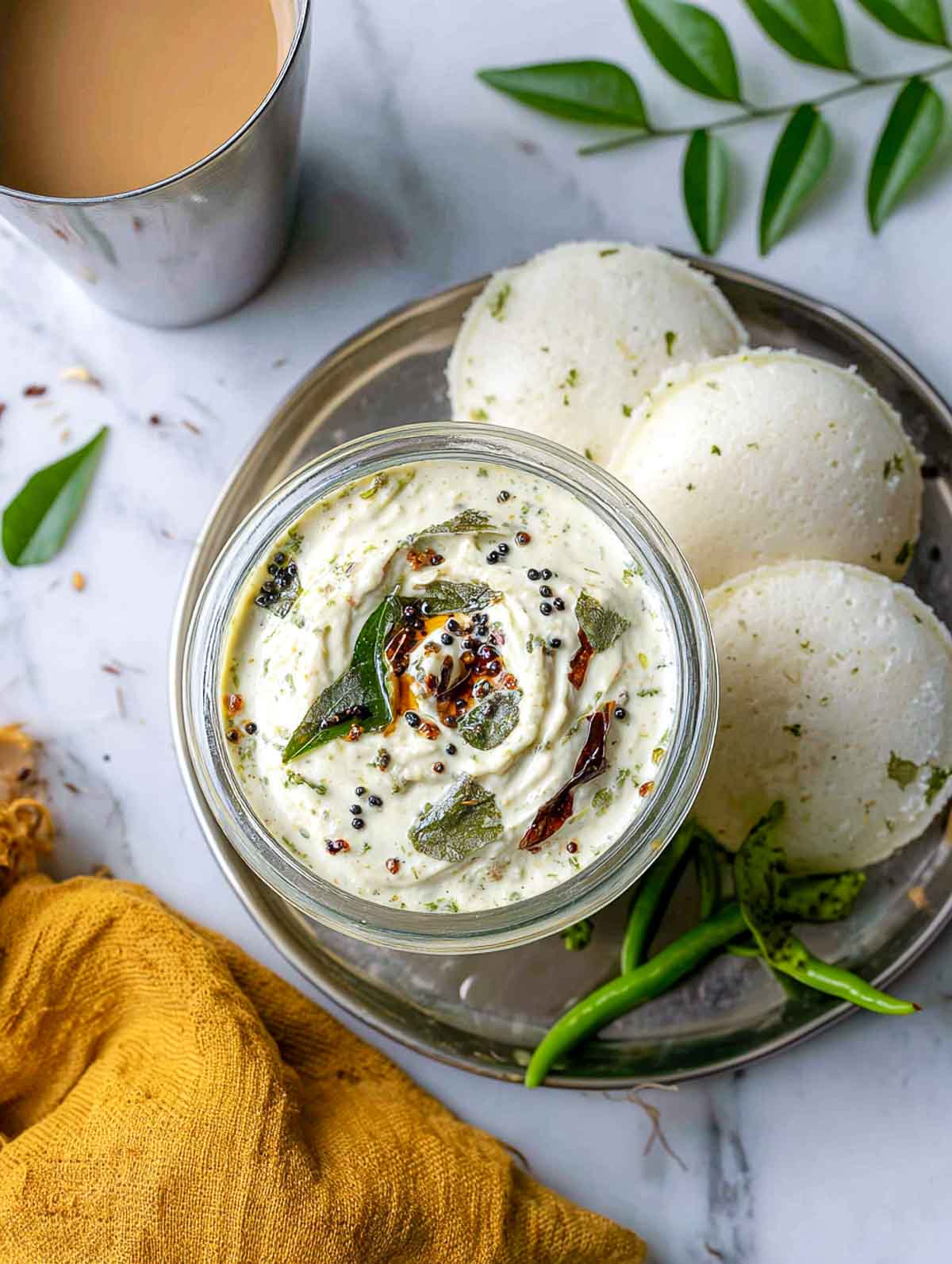
For me, good South Indian coconut chutney is about getting the basics right. Fresh coconut, a little roasted chana dal for body, green chili for heat, and a proper tempering poured over at the end. When it goes wrong, it's usually because of too much water, dull coconut, or burnt mustard seeds. Once you understand that, this traditional coconut chutney is one of the easiest things to make well.
Jump to:

Fresh vs Frozen Coconut, and How I Pick the Best Option
If I have fresh coconut, I use it. It gives the sweetest and cleanest flavor. The chutney tastes fuller, and I usually do not need much ginger or extra tang to make it feel bright. For a simple homemade coconut chutney recipe, starting with good coconut makes the biggest difference.
Frozen grated coconut is what I use most often. It is practical and consistent. I thaw it fully before blending so it grinds smoothly. I always taste a small pinch first. If it feels slightly dull, I add a little more ginger and finish with a squeeze of lemon or lime to lift it. That small adjustment is often what turns a basic chutney into a properly spicy and tangy coconut chutney.
Desiccated coconut is not an option for me. Even though you can technically make chutney with it, the taste and texture are completely different. It lacks the natural sweetness and freshness that a fresh coconut chutney depends on. If you want proper coconut chutney, stick to fresh or frozen grated coconut.
What Usually Goes Wrong (And How I Fix It)
Most problems with coconut chutney come from small mistakes. Coconut chutney is simple, in fact, one of the easiest South Indian chutney recipes. When something feels off, it is almost always one of these four things.
- Bitter chutney: If it tastes bitter, I check two things first. The coconut and the tempering. Old coconut or poorly stored frozen coconut can taste slightly rancid. Burnt mustard seeds will ruin the entire batch. Mustard seeds should pop and turn aromatic, not black and smoky. If they burn, redo the tempering.
- Watery chutney: This usually happens because too much water was added at the beginning. Coconut loosens as it blends, so I always start with less water than I think I need. I add more only after blending. It is easy to thin it out. It is not easy to fix it once it is runny.
- Thick and pasty chutney: Too much roasted chana dal makes the chutney heavy and dense. It should support the coconut, not dominate it. If it turns pasty, I loosen it slowly with a little water and adjust the salt again.
- Flat or bland chutney: If it tastes dull, it usually needs one of three things - more salt, a little more green chili, or a small squeeze of lemon. Sometimes the base is fine, and it just needs a stronger tempering poured over the top.
What I Serve This Quick Coconut Chutney With
- Idli, dosa, vada, and adai. This is where it naturally belongs, especially as one of the classic accompaniments for idli. I adjust the thickness slightly depending on what I am serving, thicker for dosa and vada, slightly looser for idli.
- Upma and pongal. A softer, spoonable chutney works better here, so it blends into each bite instead of sitting on the side.
- As a sandwich spread. Since this is naturally a vegan coconut chutney, I often use it in place of butter or creamy spreads when I want something savory and fresh.
If you enjoyed this recipe, please leave a 5-star rating and a comment below. Your support makes a real difference and helps others discover it too.
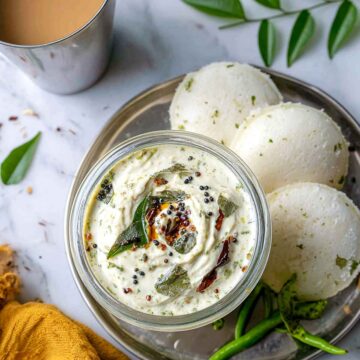
Coconut Chutney
Equipment
- Blender
- Small tempering pan
- Mixing bowl
Ingredients
For the Coconut Chutney:
- 1 cup coconut freshly grated
- 2 tablespoons roasted chana dal
- 1 green chili
- ½ teaspoon ginger grated
- 1 teaspoon tamarind concentrate or 1 small piece tamarind (make sure there are no strings or seeds)
- ½ teaspoon salt or to taste
- ½ cup water plus more as needed
For the Tempering:
- 2 teaspoons coconut oil
- ½ teaspoon black mustard seeds
- 1 dried red chili broken
- 6-8 fresh curry leaves
- 1 pinch asafoetida
Instructions
- Add the grated coconut, roasted chana dal, green chili, ginger, salt, and water to a blender. Blend until smooth and creamy, adding 1 to 2 tablespoon additional water if needed to reach a thick but spoonable consistency.
- Transfer the chutney to a serving bowl and set aside.
- Heat coconut oil in a small pan over medium heat. Add mustard seeds and allow them to splutter fully.
- Add the dried red chili, curry leaves, and asafoetida. Cook for 20-30 seconds until fragrant.
- Immediately pour the hot tempering over the chutney and serve fresh with idli, dosa, or vada.
Notes
- Freshly grated coconut gives the best texture and flavor. Frozen coconut can be used if completely thawed.
- Adjust water gradually to control thickness. The chutney should be creamy but not watery.
- Pour the tempering over the chutney while it is hot to release maximum aroma.
- Store leftovers in the refrigerator for up to 24 hours. Stir well before serving.
More Condiments To Try Next
- Light and creamy with a smooth spreadable texture, whipped honey transforms regular honey into a fluffy topping that melts beautifully on warm foods. It's especially good on toast, biscuits, pancakes, and fresh bread.
- Sweet honey infused with chili heat creates a bold drizzle that instantly adds flavor to everyday dishes. Hot honey balances sweetness and spice beautifully and works especially well on pizza, fried chicken, roasted vegetables, and cheese boards.
- Sweet dates and tangy tamarind cook down into a rich chutney with deep flavor. Date tamarind chutney has a smooth texture and balanced sweetness that works beautifully with chaats, samosas, and crispy snacks.
- Bold garlic and spices create a fiery condiment that instantly adds depth to many dishes. Garlic chutney brings intense flavor and works well with sandwiches, wraps, roasted vegetables, and grilled foods.
- Fresh ginger cooked with spices and tangy ingredients creates a chutney with bright character. Ginger chutney has a gentle warmth and aromatic flavor that pairs beautifully with savory snacks and simple meals.