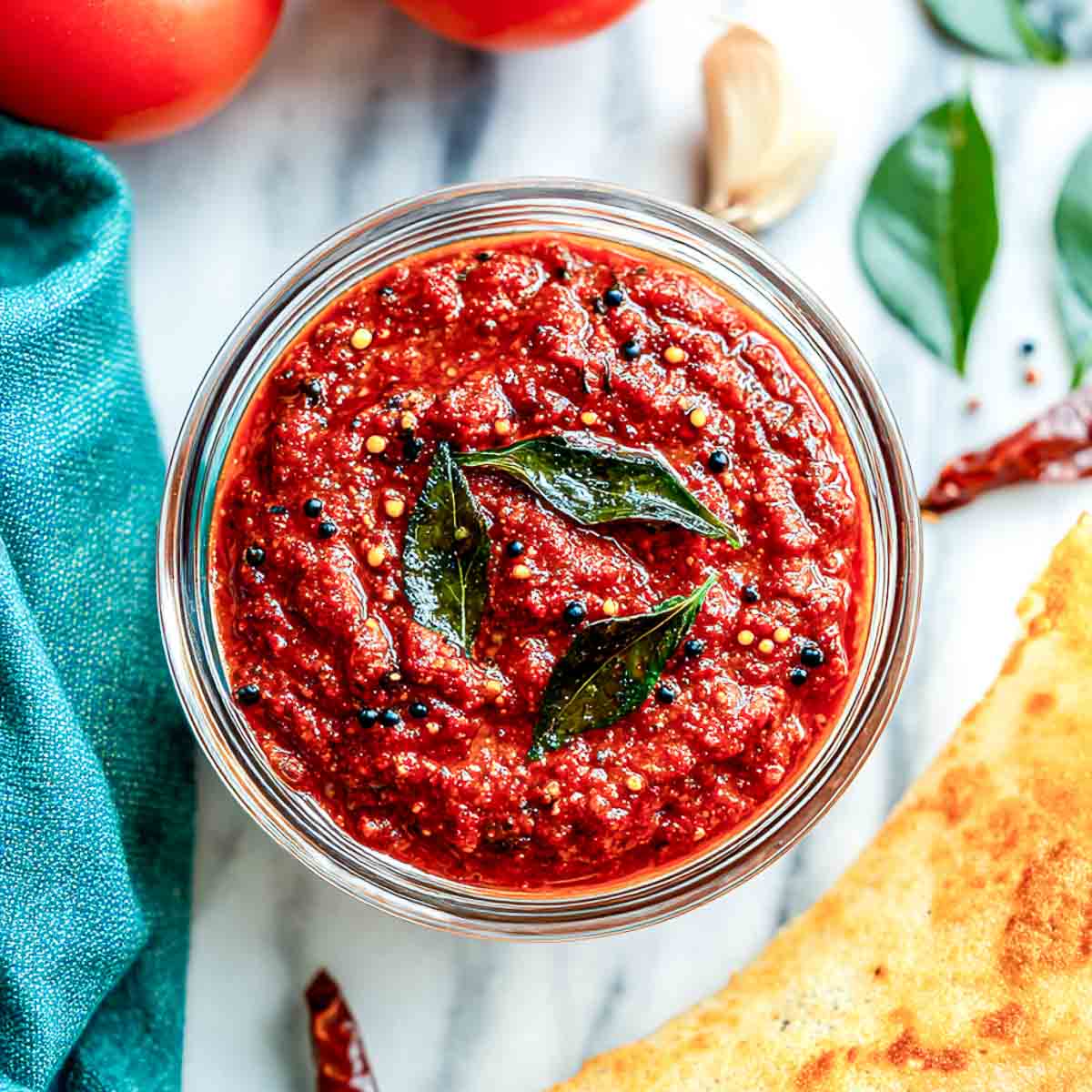
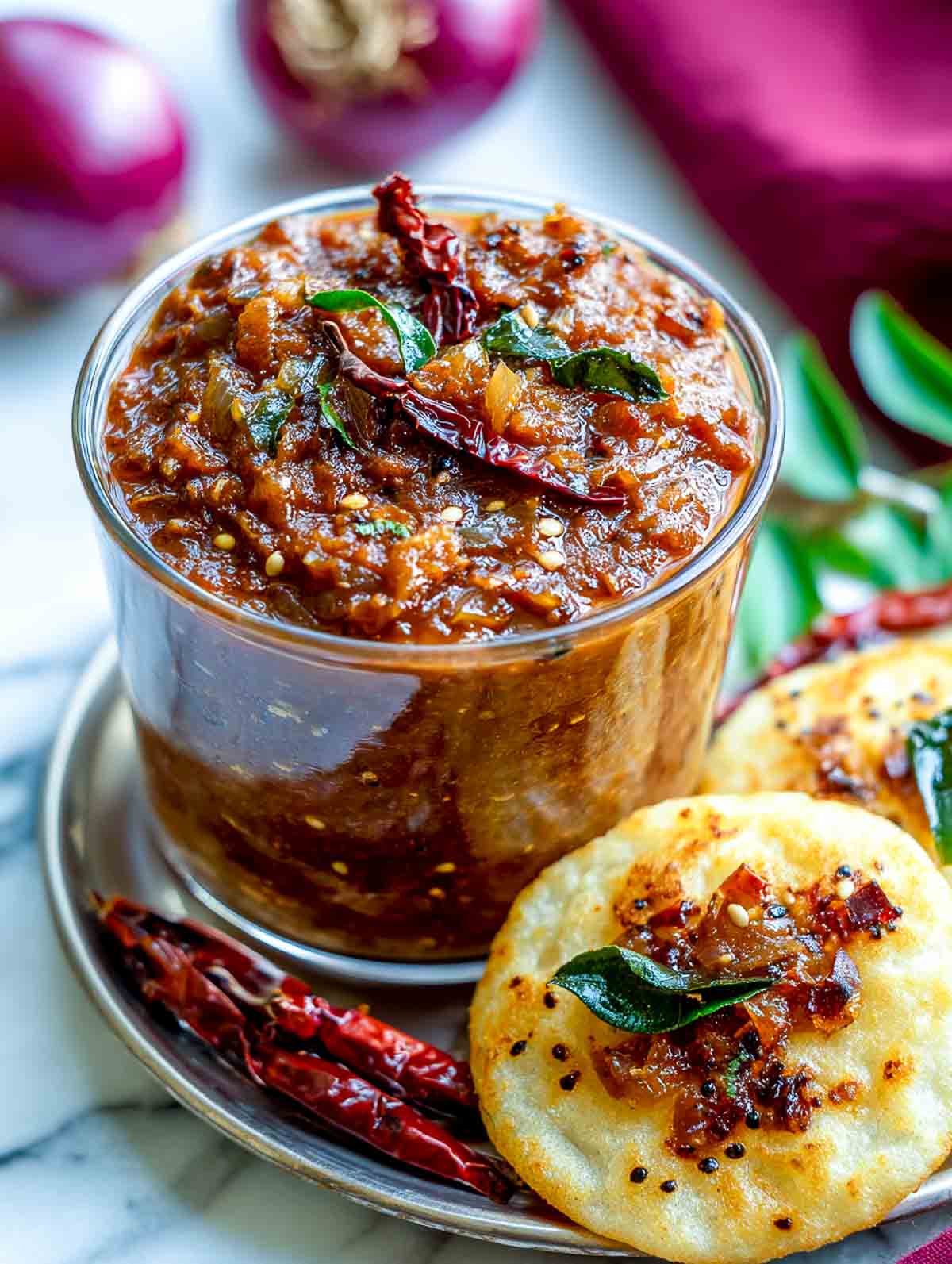
Some foods sit quietly on the side. The South Indian onion chutney does not. One spoonful wakes up plain idlis, makes dosa taste sharper and crisper, and gives even simple upma real character. I reach for it with vada, in sandwiches, and on those evenings when I want something quick but still satisfying. Onion chutney is the kind of condiment that quietly fixes everything on the plate. This easy homemade chutney earns its place at the table. You can keep it smooth or slightly coarse, make it fiery or mild, and finish it with a proper tempering for that unmistakable aroma.
Jump to:

What Onion Chutney Actually Tastes Like
The best onion chutney hits a sweet spot, literally and figuratively. It usually starts with the natural sweetness of cooked onions. That sweetness does not taste like sugar; it tastes like comfort. Then the heat shows up, often from dried red chilies. After that, a gentle tang brightens everything, so the chutney feels rounded.
What I love most is the savory depth. Even when a homemade onion chutney tastes sharp at first, it settles into something rounded and warm. That is why it works so well with mild foods like idli and pongal. When the balance is right, it becomes an easy chutney for Indian meals that quietly holds the whole plate together.
Texture matters too. Some batches turn out smooth and pourable, almost like a thick sauce. Others stay slightly coarse, which feels better with crispy snacks. When I cook the onions longer, the chutney leans jammy and deeper. When I cook them quickly, it stays punchy and bright. Tiny changes shift the whole mood. One day, I want a traditional onion chutney for dosa, and the next day, something sharper for a sandwich.
My quick test is simple: if I'd happily eat it with plain rice, the balance is right.
How the Onion I Choose Changes the Chutney
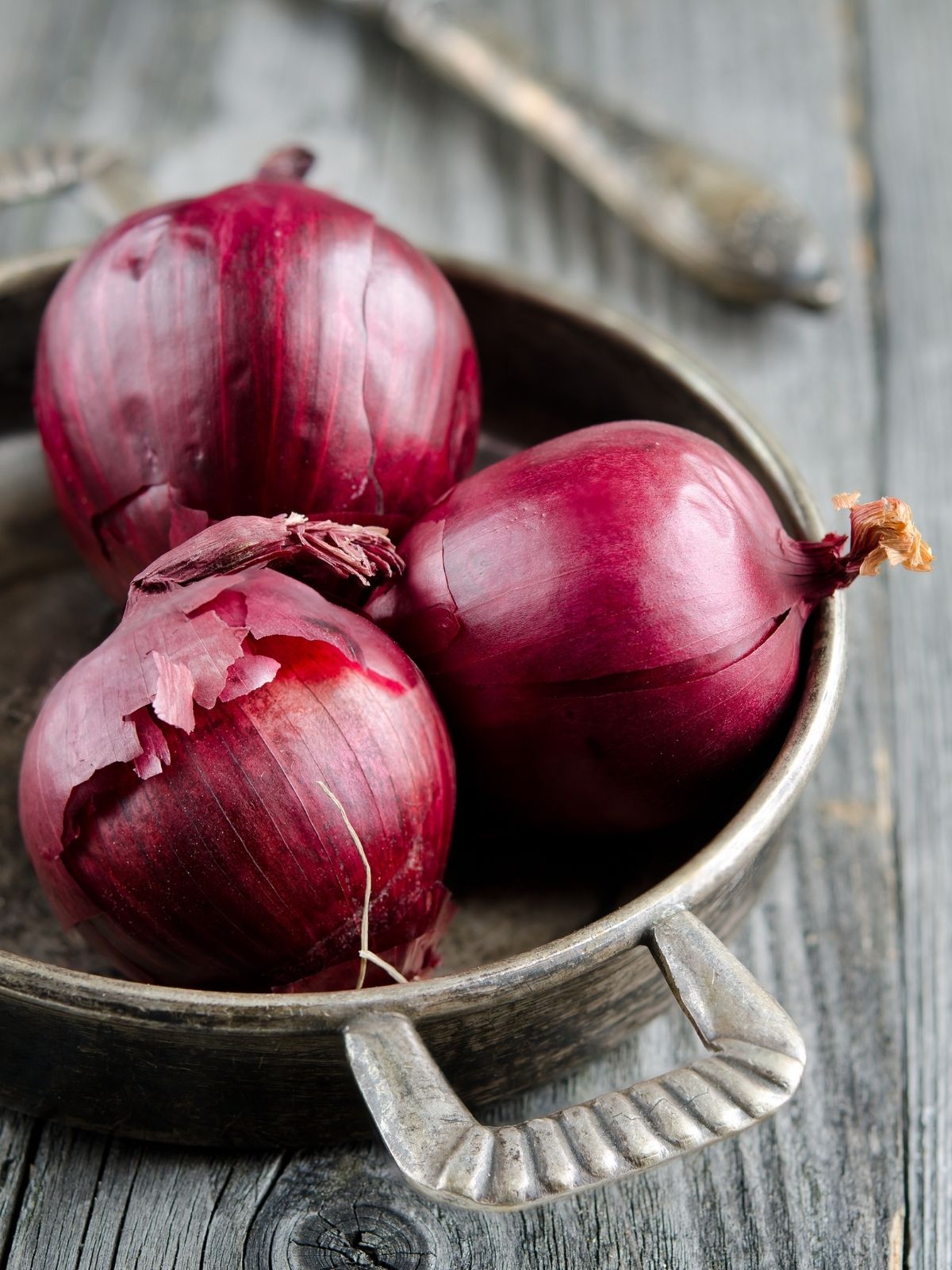
The onion I pick changes everything. Red onions give a deeper color and a sharper edge, which is why I use them when I'm making red onion chutney for idlis, dosas, and snacks. They hold their own next to hot tiffin and give the chutney that classic bite. Yellow onions taste rounder and slightly sweeter once cooked. They are a safe middle ground if I want something softer but still balanced.
Sweet onions, like Vidalia, are much milder. They turn noticeably sweet once cooked down. I do not prefer them for onion chutney because they can throw off the balance. The chutney starts tasting flat unless you push the heat and tang much harder.
What To Eat Onion Chutney With (Beyond Idli and Dosa)
Onion chutney can do more than sit next to breakfast. It's one of those DIY chutney for Indian meals that fit almost anywhere. Try it with:
- Steamed rice or curd rice (stir in a spoon like a quick pickle).
- Chapati wraps with paneer, potatoes, chicken, or tofu.
- Roasted veggies (cauliflower and carrots love the spice).
- Egg dishes (scrambled eggs, omelets, or egg bhurji).
- Crackers or toast for a quick snack.
- It also works as an instant flavor boost in a grain bowl. Add chutney, yogurt, and a drizzle of oil, then mix.
If you enjoyed this recipe, please leave a 5-star rating and a comment below. Your support makes a real difference and helps others discover it too.
South Indian Onion Chutney
Equipment
- Large skillet or sauté pan
- Blender
- Tempering pan
Ingredients
For the Chutney
- 5 medium red onions sliced
- 10 dried red chilies
- 2 tablespoons oil
- 1 tablespoon urad dal
- 1 tablespoon chana dal
- 1 teaspoon cumin seeds
- ½ teaspoon fenugreek seeds
- 8-10 garlic cloves
- ½ teaspoon kosher salt adjust as per taste
- 1 tablespoon tamarind concentrate
For the Tempering
- ¼ cup oil
- 1 teaspoon mustard seeds
- ½ teaspoon urad dal
- Pinch asafoetida
- 8-10 curry leaves
- 2 teaspoons grated jaggery
- ½ teaspoon kosher salt
Instructions
- Soak the dried red chilies in hot water for 10 minutes. Drain and set aside.
- Heat 2 tablespoons oil in a large pan over medium heat. Add urad dal, chana dal, cumin seeds, and fenugreek seeds. Sauté until the dals turn lightly golden and aromatic.
- Add garlic cloves and cook briefly, just until fragrant. Add sliced onions and cook until they soften and shrink in volume. Stir in ½ teaspoon salt and continue cooking until the onions lose their raw sharpness and change color slightly. They should soften fully but not brown deeply.
- Add the soaked red chilies and tamarind. Cook for 2 minutes to bring everything together.
- Remove from heat and cool completely. Transfer the mixture to a blender and grind to a thick paste. Do not add water. Blend until smooth or leave it slightly coarse for a more traditional, home-style texture. The chutney should be thick and spoonable, not runny.
- In a separate large pan, heat ¼ cup oil over medium heat. Add mustard seeds and allow them to splutter. Add urad dal, asafoetida, and curry leaves. Let the tempering turn fragrant.
- Pour in the prepared onion paste and cook for about 2 minutes. Add jaggery and the remaining ½ teaspoon salt. Continue cooking until the oil begins to separate from the sides of the pan. This step deepens the flavor and improves shelf life.
- Serve warm or at room temperature with idli, dosa, rice, or roti.
Notes
- Adjust the number of dried red chilies based on your heat preference.
- Tamarind concentrate can be replaced with whole tamarind. Use about 1 small ball.
- If jaggery is not available, substitute it with brown sugar to balance the heat and acidity.
- Cook until the oil separates properly in the final step. This improves flavor depth and helps the chutney keep longer in the refrigerator.
- Store in an airtight container in the refrigerator for up to 5 days. Always use a clean, dry spoon when serving.
More Condiments To Try Next
- Sweet mango simmered with vinegar and warm spices creates a fruit chutney with layers of flavor. Mango chutney thickens and pairs beautifully with grilled meats, rice dishes, and cheese boards.
- Fresh herbs, chilies, and citrus blend into a vibrant condiment with a refreshing flavor. Green chutney instantly brightens sandwiches, snacks, and grilled foods.
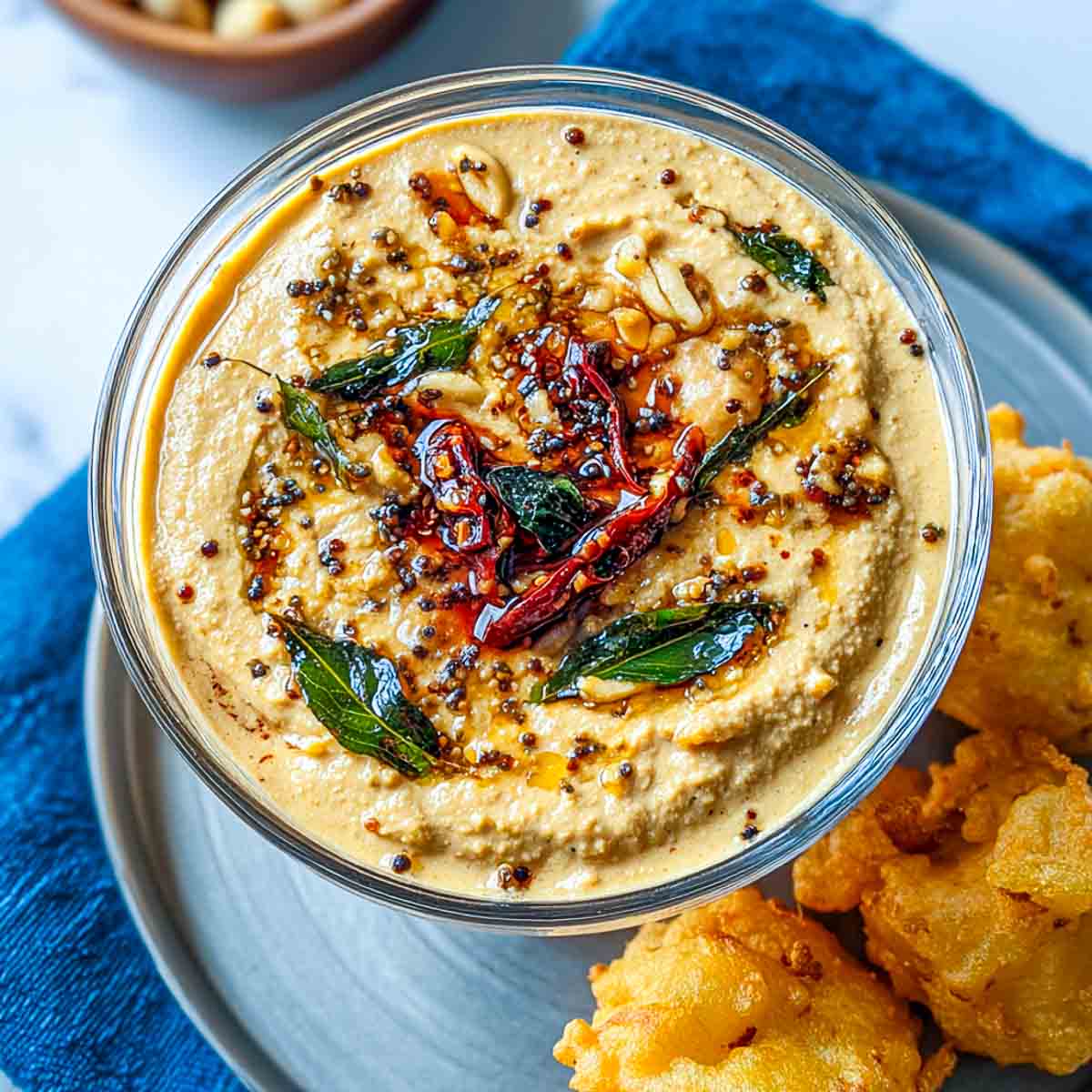
- Roasted peanuts blended with chilies and spices create a creamy condiment with a rich nutty flavor. Peanut chutney pairs beautifully with dosa, idli, and many traditional South Indian breakfasts.
- Tomatoes slowly cook with spices until they develop a deep, savory flavor. Tomato chutney has a gentle tang that complements breads, rice dishes, and simple meals.
- Sweet, tangy, and slightly crunchy, the homemade hot dog relish creates a classic condiment that brightens grilled foods. The finely chopped vegetables and vinegar base add flavor to hot dogs, burgers, and sandwiches.