
If there's one condiment I want in my fridge at all times, it's homemade green chutney. It tastes like a handful of fresh herbs met citrus and decided to wake up your whole meal. The flavor is bright, herby, tangy, and sometimes spicy, depending on how you make it. I use it with Indian snacks like samosas and pakoras, but I don't stop there. It's also my favorite spread for sandwiches, a quick sauce for grilled foods, and a way to rescue a bowl of roasted veggies.
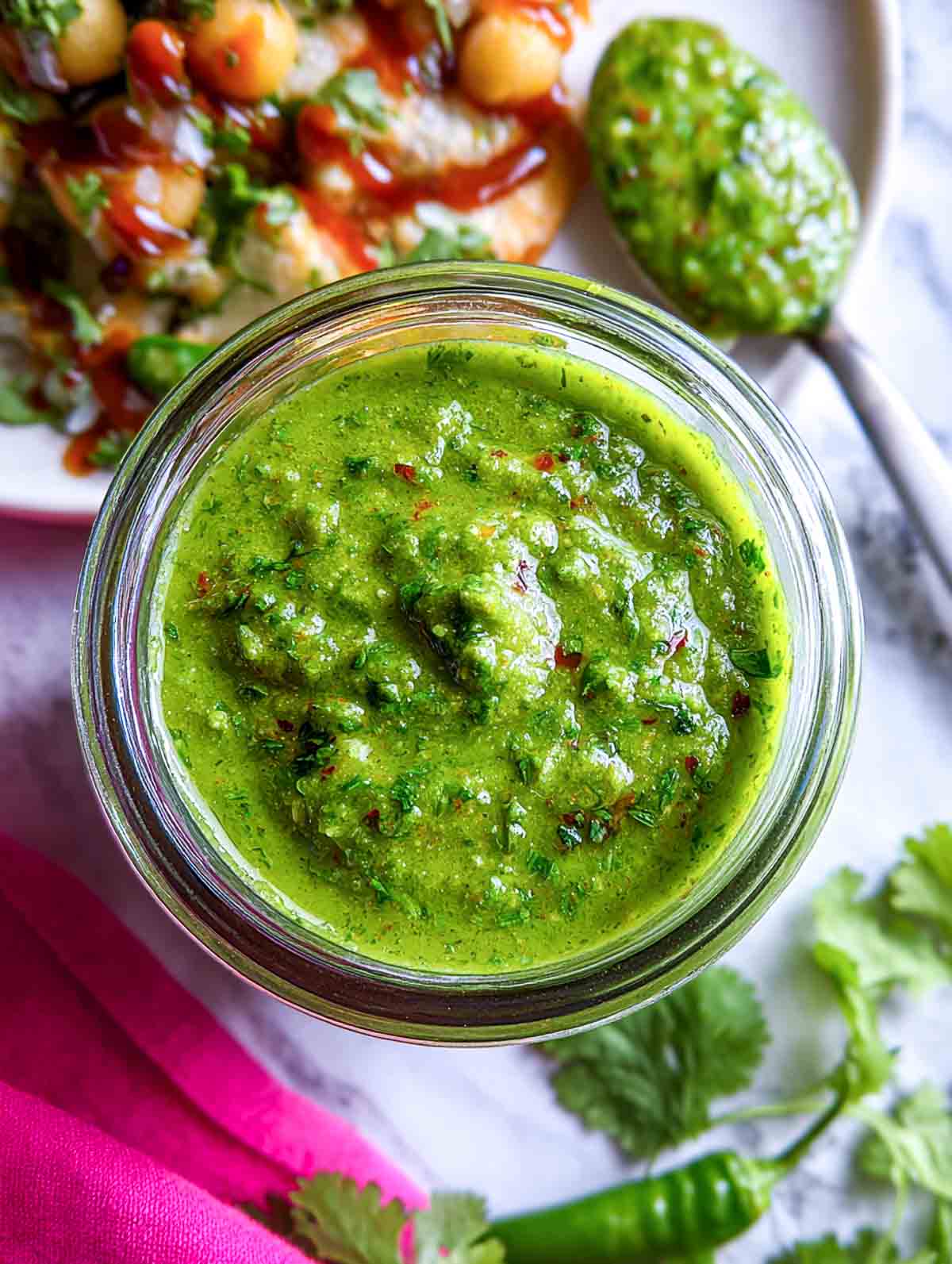
In this post, I'll share my core green chutney method, the smart swaps I rely on, how I store it, and how I fix the common problems (bitterness, watery texture, and that sad dark color).
Jump to:

My Favorite Green Chutney Recipe
I don't treat green chutney like a strict recipe. I treat it like a formula. That keeps it fast, and it helps me adjust based on what I'm serving. Here's the basic balance I aim for:
- Herbs for freshness: usually cilantro, often with mint
- Heat: green chili (and sometimes black pepper)
- Tang: lemon or lime, sometimes amchur (dry mango)
- Salt: enough to make the herbs taste like themselves
- A little water: just to get the blender moving
- Optional "body": peanuts or roasted chana dal when I want it thick
From here, I steer it to how I want to serve. If I'm eating fried snacks, I push the tang and salt. For a sandwich, I keep it thicker and add garlic. With grilled paneer or chicken, I sometimes add yogurt for a softer, creamy finish.
The best green chutney isn't the "perfect" one. It's the one you adjust for the food in front of you.
Flavor Twists I Actually Use: sandwich chutney, street-style chaat chutney, and creamy yogurt chutney
- When I want a sandwich green chutney, I make it thicker and punchier. I add a bit more garlic, sometimes an extra chili, and I keep the water to a minimum. This version clings to bread and doesn't run into a soggy mess.
- For street-style chaat chutney and spicy snacks, I bring in a different tang. Tamarind (a small piece or a spoon of paste) works, and amchur is also great. I add a pinch of roasted cumin powder and a small pinch of sugar. The result tastes rounder and a little sweet, which pairs well with bhel, sev puri, and papdi chaat.
- When I'm serving kebabs, wraps, or grilled foods, I make a creamy yogurt chutney. I mix plain yogurt into the blended green chutney, then taste again for salt and lemon. I keep the blender water low so it doesn't get runny. This one feels cool and soothing, especially with spicy food.
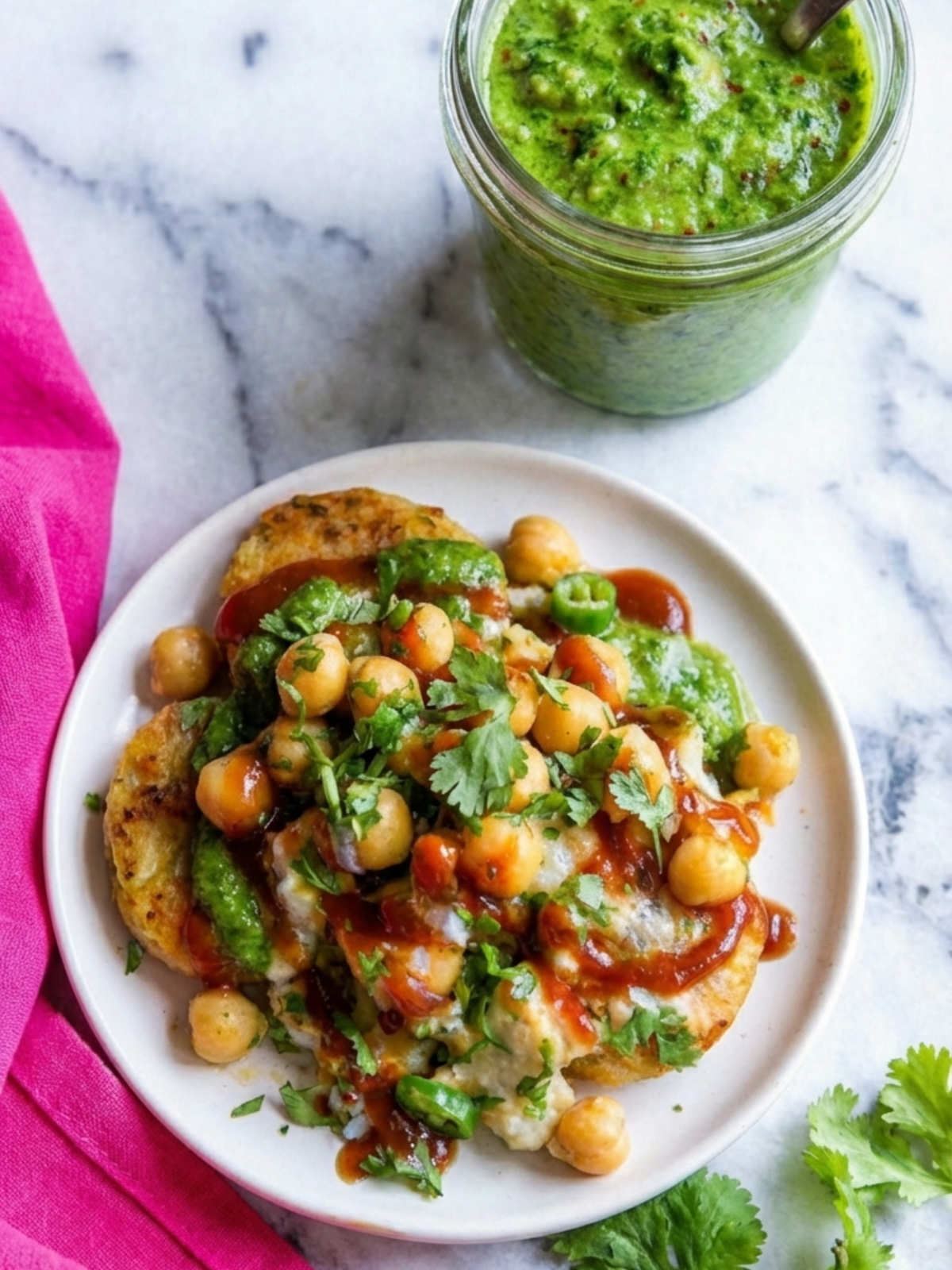
Best Ways To Use Green Chutney Beyond Samosas
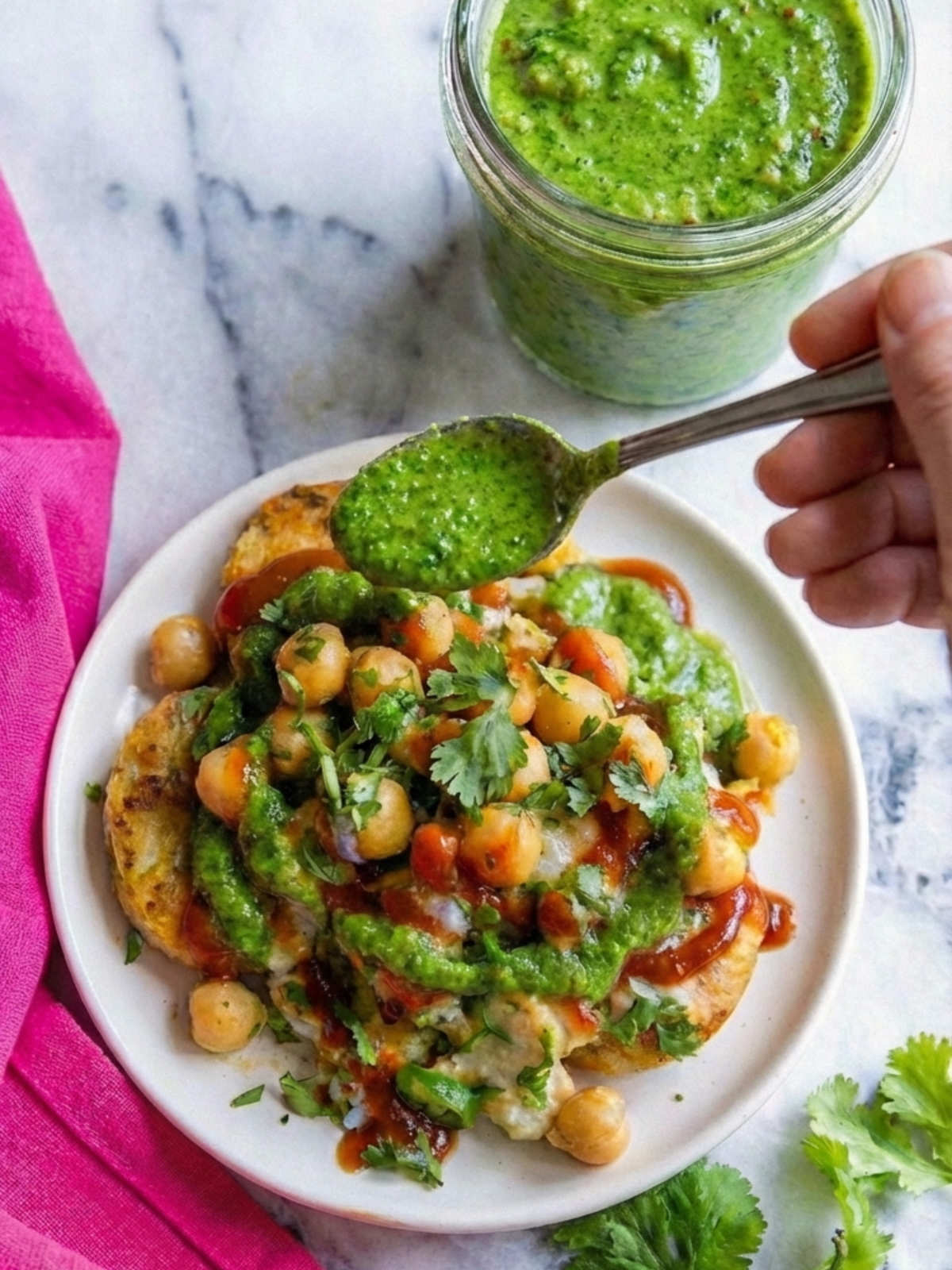
I love it with samosas, but I also treat it like a daily sauce. If you have a jar in the fridge, quick meals get easier. Here are my most-used ideas:
- Dip: with pakoras, fries, roasted potatoes, or grilled corn
- Spread: on grilled cheese, veggie sandwiches, burgers, or wraps
- Drizzle: over fried eggs, scrambled eggs, or an omelet
- Bowl sauce: on rice bowls with chickpeas, tofu, or roasted veggies
- Marinade starter: for chicken, paneer, tofu, or shrimp (add yogurt, salt, and a little oil)
- Stir-in: into plain yogurt for an instant raita-style dip
Storage and Quick Fixes
Green chutney can go bitter, and it's usually not a random thing. Overblending can bruise herbs and bring out harsh notes. Too many tough stems can also do it. Old cilantro or mint that's starting to yellow won't help either. If my chutney tastes bitter, I try one fix at a time:
- Add a bit more lemon juice and a pinch more salt
- Add a tiny pinch of sugar if the bitterness feels sharp
- Blend in more mint or a spoonful of yogurt to soften the edge
When it turns out too spicy, don't just add water because that thins the flavor. Instead, blend in more cilantro and mint, or add yogurt. A spoon of peanuts also calms the heat while keeping it thick.
If it's too thin, I usually blame wet herbs. Next time, dry them better. For a quick rescue, I blend in roasted peanuts or toasted chana dal. Even a slice of bread can thicken it in a pinch, though that changes the taste and won't keep as long.
Darkening happens because herbs oxidize when exposed to air. It still tastes fine at first, but it won't look as fresh. I store mine in a small airtight jar, pressed down so there's less air inside. Topping it with a thin layer of neutral oil also slows browning. Here are the timelines I follow at home:
- Fridge (plain green chutney): about 3 to 4 days in an airtight jar
- Fridge (yogurt version): about 2 days
- Freezer: 2 to 3 months, frozen in ice cube trays, then moved to a bag
If you freeze it in cubes, you can thaw only what you need, and the rest stays bright.
If you enjoyed this recipe, please leave a 5-star rating and a comment below. Your support makes a real difference and helps others discover it too.
📖 Recipe
Green Chutney
Equipment
- Blender or mixer grinder
- Spatula
- Bowl
- Airtight container for storage
Ingredients
- 1 cup fresh coriander leaves
- ½ cup fresh mint leaves
- 1 small garlic
- ½ inch fresh ginger
- 1 tablespoon roasted gram dal
- 3 green chilies
- ½ teaspoon ground cumin
- 1 teaspoon chaat masala
- ½ teaspoon sugar
- ½ teaspoon salt
- ¼ cup water plus more as needed
- 1 tablespoon lemon juice
Instructions
- Add coriander leaves and mint leaves to a blender jar. Add garlic, ginger, and green chilies. Add roasted gram dal, cumin powder, chaat masala, sugar, and salt.
- Blend until smooth, adding water gradually as needed to help the chutney blend evenly. Transfer to a bowl and stir in lemon juice.
- Taste and adjust salt, spice, or lemon as needed. Serve immediately or store.
Notes
- Adjust green chilies to control the heat level.
- Add water slowly to keep the chutney thick and flavorful.
- Do not overblend, as it can make the chutney slightly bitter.
- Store in an airtight container in the refrigerator for up to 3 to 4 days.
- Freeze in ice cube trays for longer storage and use as needed.
More Condiments To Try Next
- Slow-cooked onions develop deep savory flavor as they soften and caramelize. Onion chutney has a rich taste that pairs beautifully with breads, dosa, and many everyday meals.
- Sweet mango simmered with vinegar and warm spices creates a fruit chutney with layers of flavor. Mango chutney thickens and pairs beautifully with grilled meats, rice dishes, and cheese boards.
- Roasted peanuts blended with chilies and spices create a creamy condiment with a rich nutty flavor. Peanut chutney pairs beautifully with dosa, idli, and many traditional South Indian breakfasts.
- Tomatoes slowly cook with spices until they develop a deep, savory flavor. Tomato chutney has a gentle tang that complements breads, rice dishes, and simple meals.
- Sweet, tangy, and slightly crunchy, the homemade hot dog relish creates a classic condiment that brightens grilled foods. The finely chopped vegetables and vinegar base add flavor to hot dogs, burgers, and sandwiches.




Comments
No Comments